Amaterasu — The Sun Goddess of Japanese Mythology
Amaterasu-Omikami
Amaterasu-Omikami (Kojiki) / Amaterasu-Okami (Nihon Shoki) / Ohirume-no-Muchi-no-Kami / Amaterasu-masu-Sume-Omikami
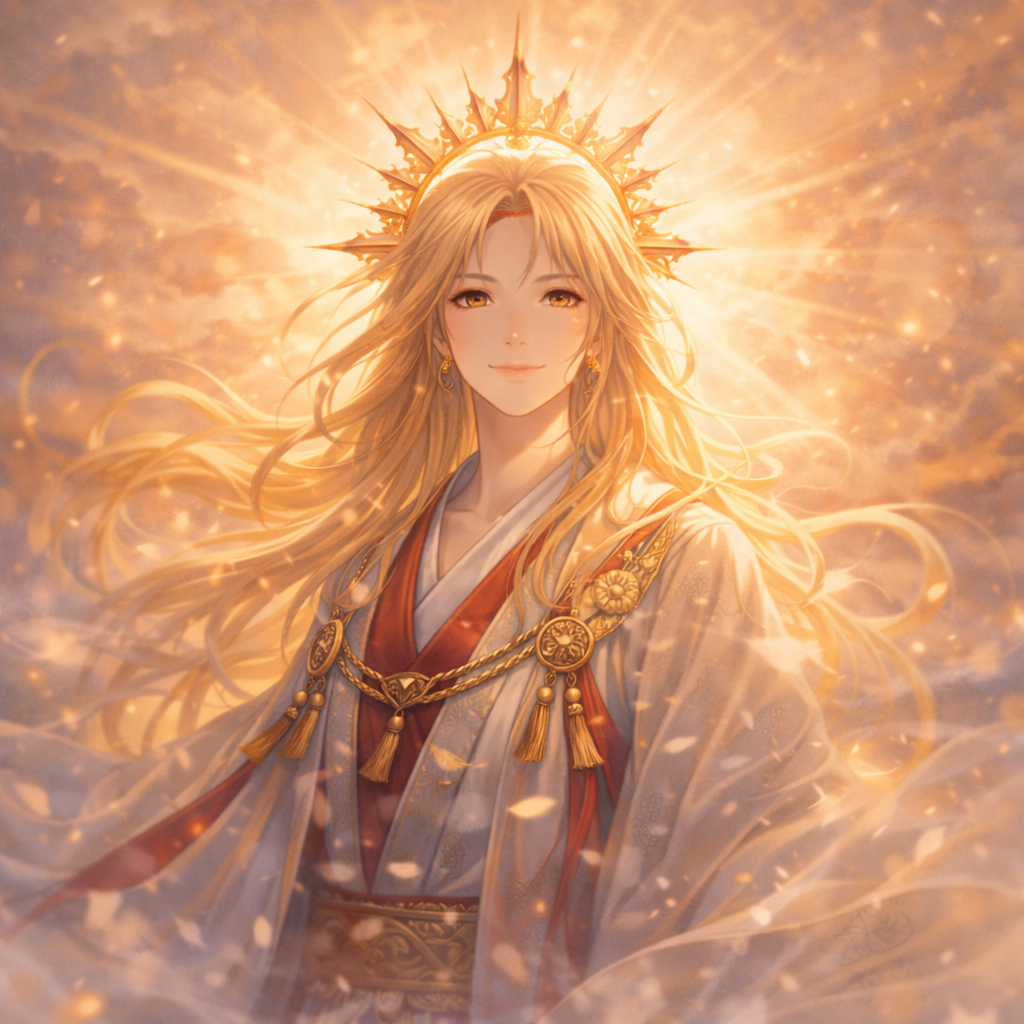
Amaterasu is the sun goddess of Japanese mythology and the presiding deity who rules Takamagahara (the High Plain of Heaven, the realm of the gods). Regarded as the ancestral deity of the imperial family, she is enshrined at the Inner Shrine (Kotai Jingu) of Ise Grand Shrine in Mie Prefecture. As her name—"the great deity who illuminates the heavens"—suggests, she symbolizes light, order, and rule, and holds a central place among the gods of Japanese myth.
| Divine role | Sun goddess; presiding deity of Takamagahara; ancestral deity of the imperial family |
|---|---|
| Gender | Goddess |
| Parentage | Izanagi. She is said to have been born when Izanagi, having returned from the land of the dead (Yomi), washed his left eye during his purification rite (misogi). |
| Siblings | Tsukuyomi and Susanoo—together with Amaterasu they form the "Three Noble Children" (Mihashira-no-Uzu-no-Miko). |
| Children & descendants | Ame-no-Oshihomimi and others. Her grandson Ninigi descended to the earthly realm (the Descent of the Heavenly Grandson) and is said to be the forebear of Emperor Jimmu. |
| Sources | Kojiki and Nihon Shoki |
| Symbol & sacred regalia | The Yata-no-Kagami (the sacred mirror, one of the Three Sacred Treasures) |
| Blessings | Good fortune, national stability, victory, vitality, and more |
| Major shrines | Ise Grand Shrine, Inner Shrine (Mie); Shinmei shrines and Tenso shrines throughout Japan |
When Izanagi, having returned from the land of the dead (Yomi), performed a purification rite (misogi) to cleanse himself of defilement, Amaterasu is said to have been born from his left eye. Izanagi entrusted her with the rule of Takamagahara, the High Plain of Heaven.
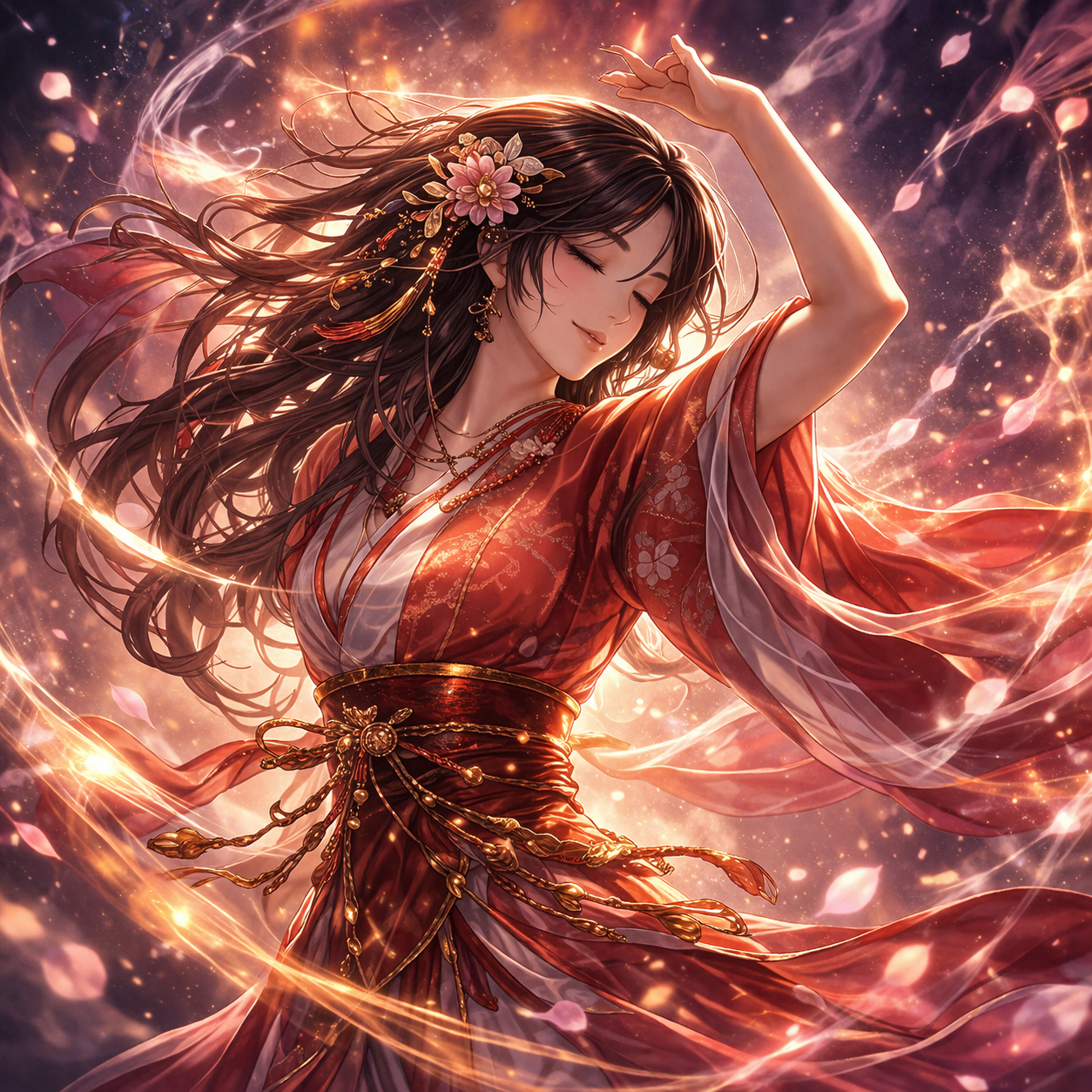
Grieved by the violent conduct of her brother Susanoo, Amaterasu shut herself away inside the heavenly rock cave. With the sun goddess hidden from sight, the world was plunged into darkness and overrun with calamity. The troubled gods devised a scheme before the cave: Ame-no-Uzume danced, and the gods created a clamor of laughter and merriment. The moment a puzzled Amaterasu, wondering at the commotion outside, opened the door a crack, the mighty Ame-no-Tajikarao flung it wide, and light returned to the world. This "hiding in the rock cave" is known as one of the most representative myths symbolizing the death and rebirth of the sun and the restoration of order.
Later, Amaterasu granted her grandson Ninigi rice ears and the Three Sacred Treasures, and commanded him to rule the earthly realm (Ashihara-no-Nakatsukuni). This lineage is held to be the origin of the imperial house, and Amaterasu came to be regarded as the ancestral deity of the imperial family.
Amaterasu embodies light, order, and harmony. Rather than fighting fiercely herself, she has the character of a "center" that gives direction and meaning to a space simply through her presence. At the same time, the episode of hiding in the rock cave tells of an unexpected delicacy in the sun goddess—that even an absolute being can be wounded and withdraw. The one who brings light sometimes conceals herself and then appears again; this very cycle can be said to be the essence of Amaterasu.
Her head shrine is the Inner Shrine (Kotai Jingu) of Ise Grand Shrine. Known for the "Shikinen Sengu," in which the shrine buildings are rebuilt every twenty years, it has long drawn deep devotion as "Oise-san." She is also enshrined at Shinmei shrines, Tenso shrines, and Daijingu throughout the country, and is one of the most widely revered deities in Japan.