Susanoo — the Storm God Who Slew Yamata-no-Orochi
Susanoo-no-Mikoto
Susanoo-no-Mikoto (Kojiki) / Susanoo-no-Mikoto (Nihon Shoki) / Takehaya-Susanoo-no-Mikoto / Gozu Tenno (identified with Susanoo in Shinto-Buddhist syncretism)
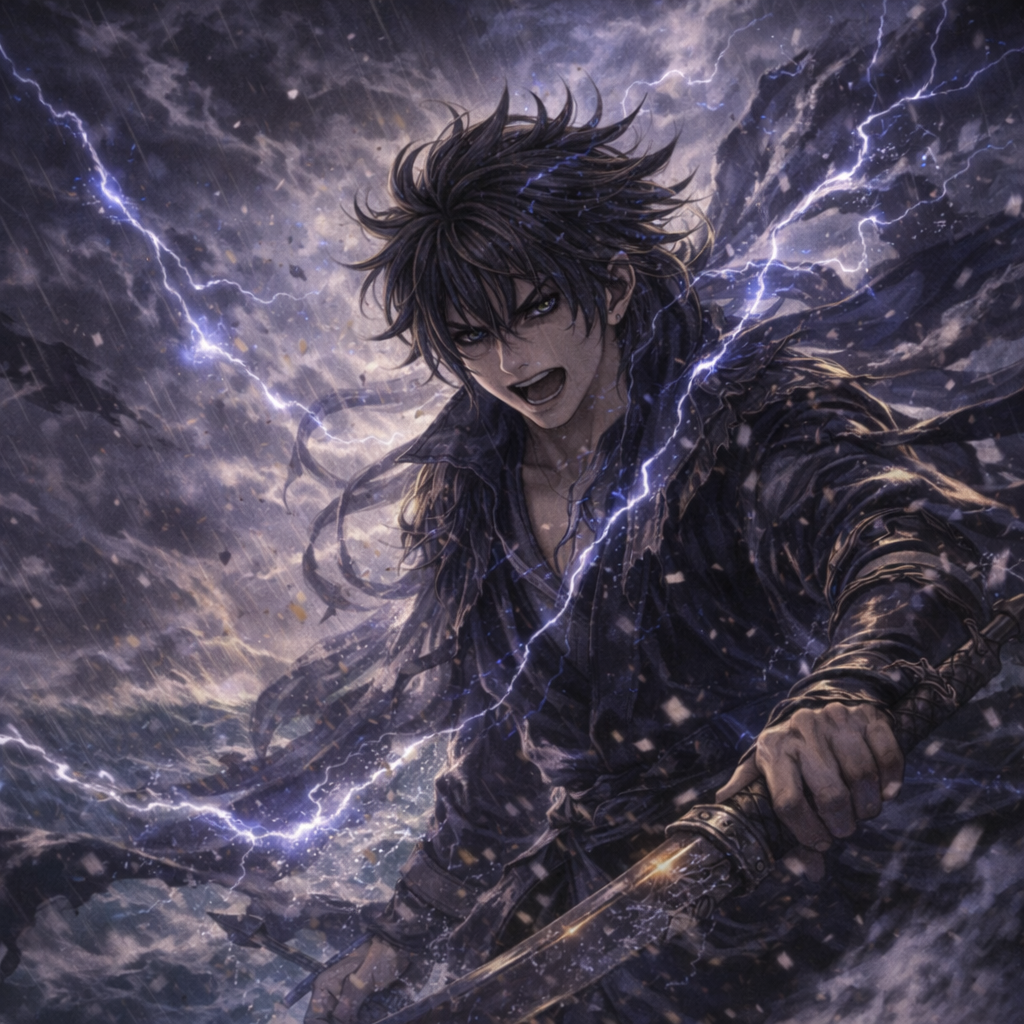
Susanoo (Susanoo-no-Mikoto) is the god of the seas and storms in Japanese mythology, a complex deity who combines both a heroic and a violent, turbulent nature. While he is exiled from Takamagahara (the High Plain of Heaven) for his unruly conduct, on earth he becomes a hero by slaying the eight-headed serpent Yamata-no-Orochi. A central figure of the Izumo mythology, he is enshrined at Yasaka Shrine in Kyoto and at Hikawa shrines across Japan.
| Divine role | God of the seas and storms / god of warding off misfortune and disease / ancestral deity of Izumo |
|---|---|
| Gender | Male deity |
| Parentage | Izanagi-no-Mikoto (Izanagi); said to have been born when Izanagi washed his nose during the purification rite |
| Siblings | Amaterasu and Tsukuyomi — the Three Noble Children (Mihashira-no-Uzu-no-Miko) |
| Spouse | Kushinada-hime (Kushinada) |
| Children and descendants | Among his descendants is the god Okuninushi |
| Sources | Kojiki, Nihon Shoki, Izumo no Kuni Fudoki |
| Symbols and sacred treasure | Kusanagi-no-Tsurugi (the Grass-Cutting Sword, one of the Three Sacred Treasures, obtained from the serpent's tail) |
| Blessings | Warding off misfortune and calamity, matchmaking, abundant harvests, and more |
| Major shrines | Yasaka Shrine (Kyoto), Hikawa Shrine (Saitama and elsewhere), Susa Shrine and Suga Shrine (Shimane) |
Commanded by Izanagi to rule the seas, Susanoo instead wept and raged out of longing for the land of his late mother, refusing to obey. When he visited the High Plain of Heaven where his elder sister Amaterasu dwelt, he committed one act of violence after another, such as destroying the ridges of her rice paddies. This became one of the causes of Amaterasu hiding in the Heavenly Rock Cave (Ame-no-Iwato). Held responsible, Susanoo was exiled from Takamagahara.
Having descended to earth, Susanoo met an elderly couple in the land of Izumo who grieved because the great serpent took one of their daughters every year. On the condition that he marry their daughter Kushinada-hime, Susanoo slew the eight-headed serpent Yamata-no-Orochi by intoxicating it with strong sake. From its tail emerged the sword Kusanagi-no-Tsurugi, which he presented to Amaterasu. A god who had been an exile becomes a savior on earth — this story symbolizes Susanoo's dual nature.
United with Kushinada-hime, Susanoo built a palace in Izumo and is said to have composed the famous poem beginning "Yakumo tatsu Izumo…" ("Eight clouds rise over Izumo…"). From his lineage came Okuninushi, the god of land-making, placing Susanoo at the source of the Izumo mythology.
Susanoo is a god who unites destruction and renewal, chaos and heroism. The turbulent force that disrupts order can, when the place and context change, become the power to cut down calamity. The reversal of his reputation — a "violent troublemaker" in Takamagahara, a "hero" on earth — reflects the mythological theme that power itself is neither good nor evil; rather, the arena in which it is wielded determines its meaning.
At Yasaka Shrine in Kyoto (the Gion faith), Susanoo was syncretized with Gozu Tenno and has long been worshipped as a god who wards off epidemics. In the Kanto region he is enshrined at Hikawa shrines, and in Izumo at Susa Shrine and Suga Shrine. He is known for blessings of warding off misfortune and calamity, and for matchmaking.