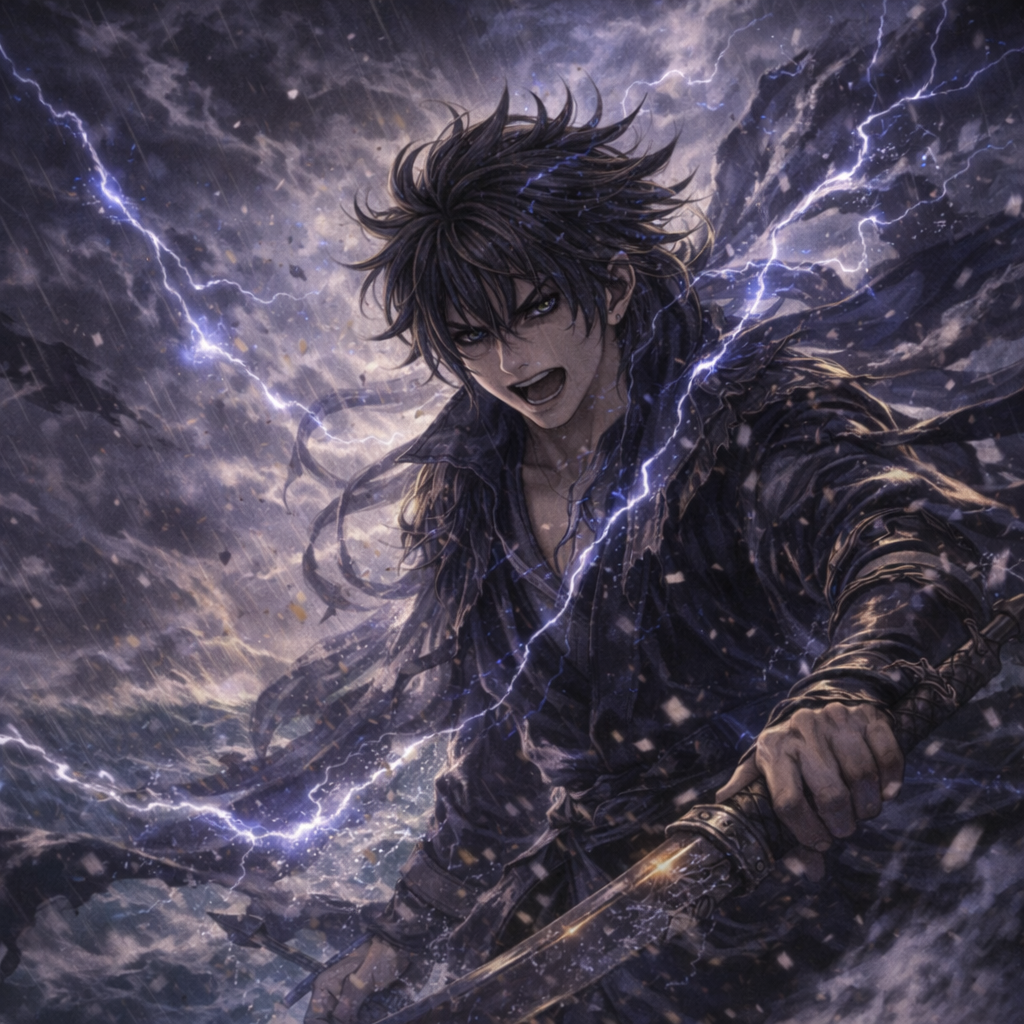
Who Is Ame-no-Uzume? — The Goddess of Performing Arts Who Danced Before the Heavenly Rock Cave and Called Light Back to the World
Ame-no-Uzume-no-Mikoto
Ame-no-Uzume-no-Mikoto (Kojiki) / Ame-no-Uzume-no-Mikoto, written 天鈿女命 (Nihon Shoki) / Miyabi-no-Kami / ancestral deity of the Sarume-no-Kimi clan
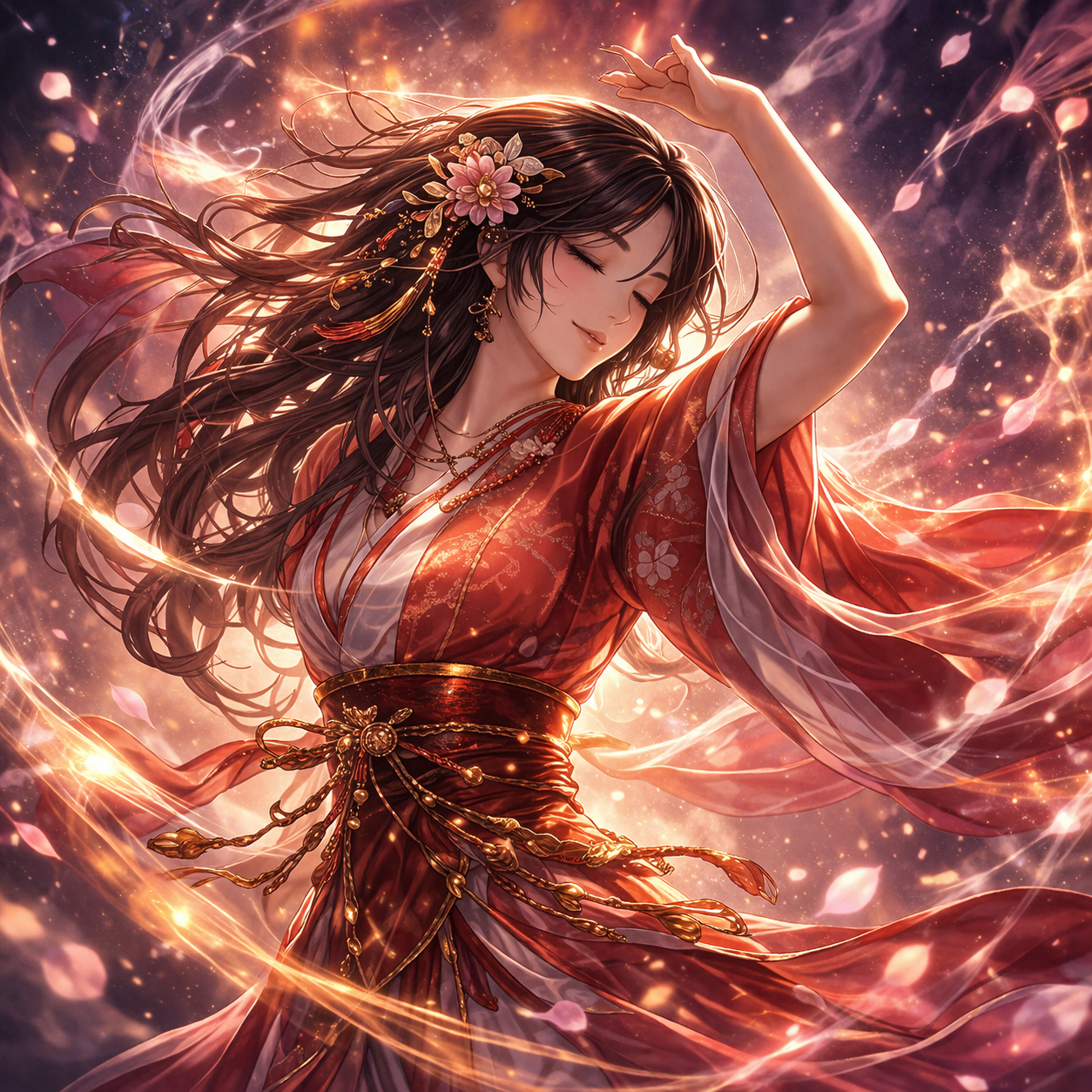
Ame-no-Uzume is the goddess of performing arts and dance in Japanese mythology. In the myth of the Heavenly Rock Cave, she danced boldly before the assembled gods to lure out Amaterasu, who had hidden herself inside the cave, creating the turning point that restored light to the world. Her dance is regarded as the origin of kagura (sacred Shinto dance). She later married Sarutahiko, who guided the heavenly descent, and is said to be the ancestral deity of his clan, the Sarume-no-Kimi.
Quick facts
Divine role
Goddess of performing arts and dance; regarded as the origin of kagura
Gender
Goddess
Parentage
The Kojiki and Nihon Shoki give no clear genealogy; she appears as one of the deities of Takamagahara (the High Heavenly Plain)
Spouse
Sarutahiko-no-Okami (Sarutahiko) — the deity who guided the heavenly descent; later regarded as her husband
Children / descendants
Said to be the ancestral deity of the Sarume-no-Kimi clan, who served under and bore the name of Sarutahiko
Sources
The Kojiki and the Nihon Shoki
Blessings
Mastery of the performing arts, skill in all crafts and techniques, matchmaking, marital harmony, good fortune, and more
Major shrines
Sarume Shrine (within the precincts of Sarutahiko Shrine, Mie), Tsubakishi Shrine (Tsubaki Grand Shrine, Mie), Chiyo Shrine (Shiga), Hinomiko Shrine of Togakushi Shrine (Nagano)
Mythology
The Heavenly Rock Cave and the Dance
When Amaterasu, grieved by the violence of her brother Susanoo, shut herself away in the Heavenly Rock Cave and the world was plunged into darkness, the gods gathered before the cave to devise a plan. Ame-no-Uzume overturned a tub and stamped upon it to make it resound, then bared her breast and danced boldly. At the sight, the myriad gods (yaoyorozu) burst into roaring laughter, and Takamagahara shook with the merriment. Suspicious of the commotion outside, Amaterasu opened the cave door just a crack, and in that instant the mighty Ame-no-Tajikarao flung the door open, and light returned to the world. This dance is considered the origin of kagura and the reason Ame-no-Uzume is revered as a goddess of the performing arts.
The Heavenly Descent and Sarutahiko
Later, as Ninigi, the grandson of Amaterasu, descended to earth in the heavenly descent, a deity of strange and imposing appearance stood waiting at the crossroads between heaven and earth. While the other gods hesitated, Ame-no-Uzume stepped forward and demanded his name, revealing that he was the earthly deity Sarutahiko, who had appeared to serve as a guide. This scene, in which she stands fearlessly at the boundary, is well known as an episode symbolizing her boldness and skill in negotiation.
Ancestor of the Sarume-no-Kimi
Because she had escorted Sarutahiko to his destination, Ame-no-Uzume came to serve under his name, and is said to have become the ancestral deity of the clan called Sarume-no-Kimi. There is also an episode in which she compelled the sea creatures offered in tribute to speak and submit, said to be the origin of the Sarume-no-Kimi's later duties in spirit-pacification and kagura. After the age of the Kojiki and Nihon Shoki, Ame-no-Uzume and Sarutahiko came to be regarded as husband and wife, and were enshrined across the land as deities of matchmaking and marital harmony.
Symbolism & character
Ame-no-Uzume embodies the "power of lively festivity" that opens up a space and draws people in. Her essence lies in how, at a moment of crisis when the gods were at a loss, she moved the situation not through reason but through the body and through laughter. The boldness to dance beyond shame, the nerve to confront an unknown figure and demand his name—both speak to the character of a performer who breaks open a frozen atmosphere and connects people to one another. Against Amaterasu, who is light itself, Ame-no-Uzume is "the one who lures the light out," and the two are told of as a complementary pair at the heart of the Rock Cave myth.
Shrines & worship
As the guardian deity of performing arts, dance, and all crafts, she receives devoted faith from those in the entertainment world—actors, dancers, and musicians. At Sarume Shrine, an auxiliary shrine within the precincts of Sarutahiko Shrine in Mie Prefecture, she is enshrined together with her husband Sarutahiko and is known as a shrine for mastery of the arts and for matchmaking. She is also enshrined at Tsubakishi Shrine, a detached shrine of Tsubaki Grand Shrine in Mie; at Chiyo Shrine in Hikone, Shiga (a rare case in which Ame-no-Uzume is the principal enshrined deity); and at the Hinomiko Shrine of Togakushi Shrine in Nagano City, where she is revered across the land for blessings of the arts and good matches.
FAQ
Q. What is Ame-no-Uzume the deity of?
She is the goddess of performing arts and dance, regarded as the origin of kagura (sacred Shinto dance). She is famous for dancing before the Heavenly Rock Cave to lure out the hidden sun goddess Amaterasu, and is worshipped as a deity of mastery in the arts and of matchmaking.
Q. Where is Ame-no-Uzume enshrined?
She is enshrined at Sarume Shrine within the precincts of Sarutahiko Shrine in Mie Prefecture, at Tsubakishi Shrine of Tsubaki Grand Shrine, at Chiyo Shrine in Shiga Prefecture, and at the Hinomiko Shrine of Togakushi Shrine in Nagano City, among others.
Q. What is the relationship between Ame-no-Uzume and Sarutahiko?
During the heavenly descent, Ame-no-Uzume questioned and revealed the identity of Sarutahiko, the guiding deity, and this connection led to them later being regarded as husband and wife. At shrines that enshrine the two together, they are revered as deities of matchmaking and marital harmony.
Q. What is the difference between the names written 天宇受売命 and 天鈿女命?
They are different written forms of the same deity. The Kojiki writes the name as 天宇受売命, while the Nihon Shoki writes it as 天鈿女命—both read as Ame-no-Uzume-no-Mikoto.
Q. Why is Ame-no-Uzume regarded as the deity of the performing arts?
The dance she performed in the Heavenly Rock Cave myth is held to be the origin of kagura, and because her art called the sun goddess back into the world, she came to be regarded as the guardian deity of dance, music, theater, and all the performing arts and crafts.