Who Is Sarutahiko? — The Path-Opening God Who Guided the Heavenly Descent
Sarutahiko-no-Mikoto
Sarutabiko-no-Kami (Kojiki) / Sarutahiko-no-Mikoto, Sarutahiko-no-Okami (Nihon Shoki and later) / Chimata-no-Kami (god of the crossroads) / identified with the Dosojin (wayside guardian deity)
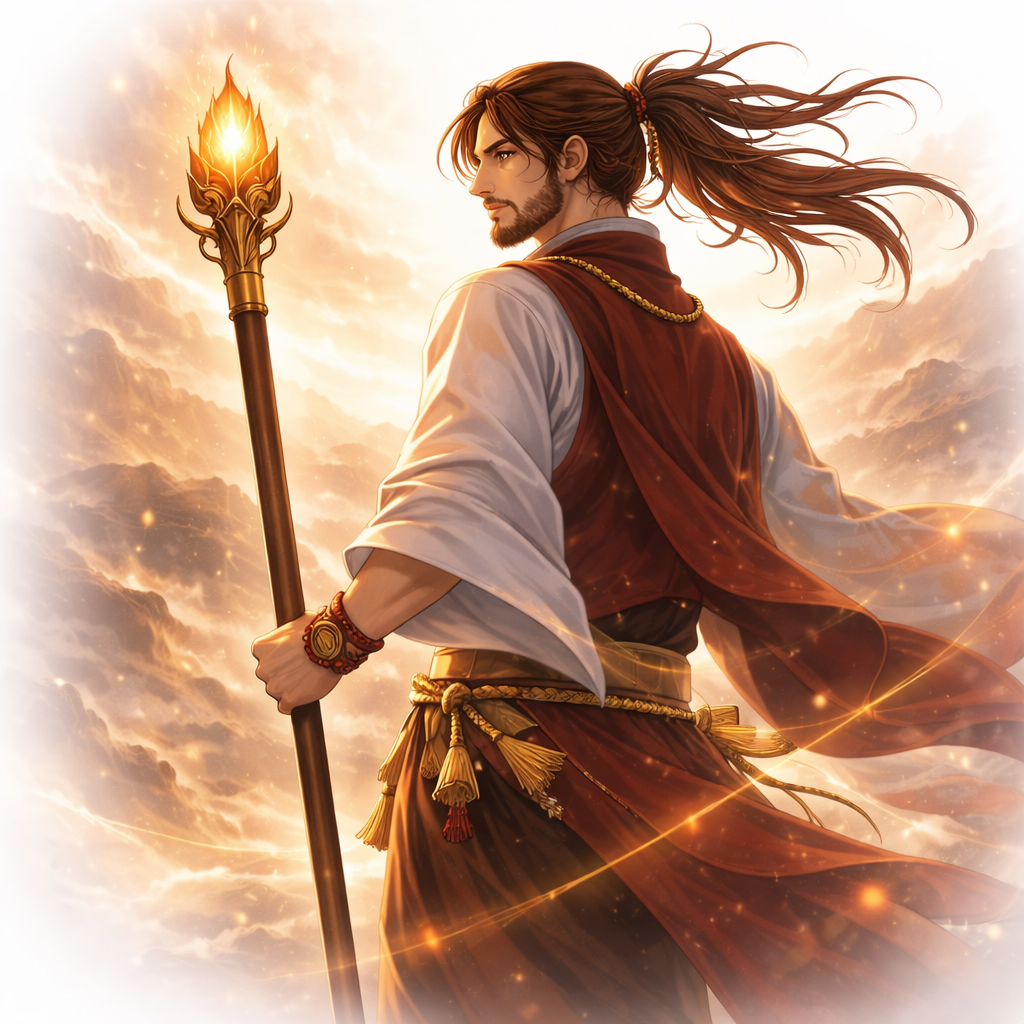
Sarutahiko is the **god of guidance and of opening the way**, who waited on earth to receive Ninigi and his party as they descended from the heavens, and then served as their pathfinder. Standing at the boundary between the heavenly and earthly worlds and pointing the way forward, he is regarded as a deity who grants blessings for traffic safety, protection against unlucky directions, and the beginning of new endeavors. He is enshrined at Tsubaki Okami Yashiro, Futami Okitama Shrine, and other sites in Mie Prefecture, and in later ages he came to be identified with the Dosojin (wayside guardian deity).
Quick facts
Divine role
God of guidance and of opening the way / god of the chimata (crossroads, the forking of paths). Guardian deity of travel and the road
Gender
Male deity
Parentage
The Kojiki and Nihon Shoki give no clear record of his divine parents, and his origins are unknown. He is classed among the Kunitsukami (earthly gods)
Consort
Ame-no-Uzume. In traditions of the Nihon Shoki line, the two are regarded as husband and wife, owing to Uzume having escorted Sarutahiko home
Children / related deities
The three gods said to have come into being when he drowned: Sokodoku-mitama, Tsubutatsu-mitama, and Awasaku-mitama
Sources
The Kojiki and the Nihon Shoki
Appearance
A monstrous giant said to have a nose seven ata long, a height of seven shaku, and eyes that glowed red like the Yata-no-Kagami (eight-span mirror)
Blessings
Opening the way, traffic safety, protection against unlucky directions, the start of ventures and new endeavors, matchmaking, and more
Major shrines
Tsubaki Okami Yashiro (Suzuka, Mie; regarded as the head shrine for the entire country), Sarutahiko Shrine (Ise, Mie), Futami Okitama Shrine (Ise, Mie), Azaka Shrine (Matsusaka, Mie)
Mythology
Leading the Heavenly Descent
When Ninigi, the grandson of Amaterasu, was about to descend from Takamagahara to the earthly land (Ashihara-no-Nakatsukuni) bearing the Three Sacred Treasures, a single deity stood blocking the Yachimata (the place where the road splits into many branches) that joined heaven and earth — a god who lit up Takamagahara above and Ashihara-no-Nakatsukuni below. This was Sarutahiko. As the gods recoiled at his strange appearance, Ame-no-Uzume, acting on Amaterasu's command, stepped forward to ask his name and identity. Sarutahiko answered, "I have come to meet you, in order to guide the child of the heavenly gods." In this way Sarutahiko served as the party's pathfinder and led Ninigi safely down to earth. From this episode, Sarutahiko came to be widely worshipped as the god who 'opens the way.'
The Bond with Ame-no-Uzume
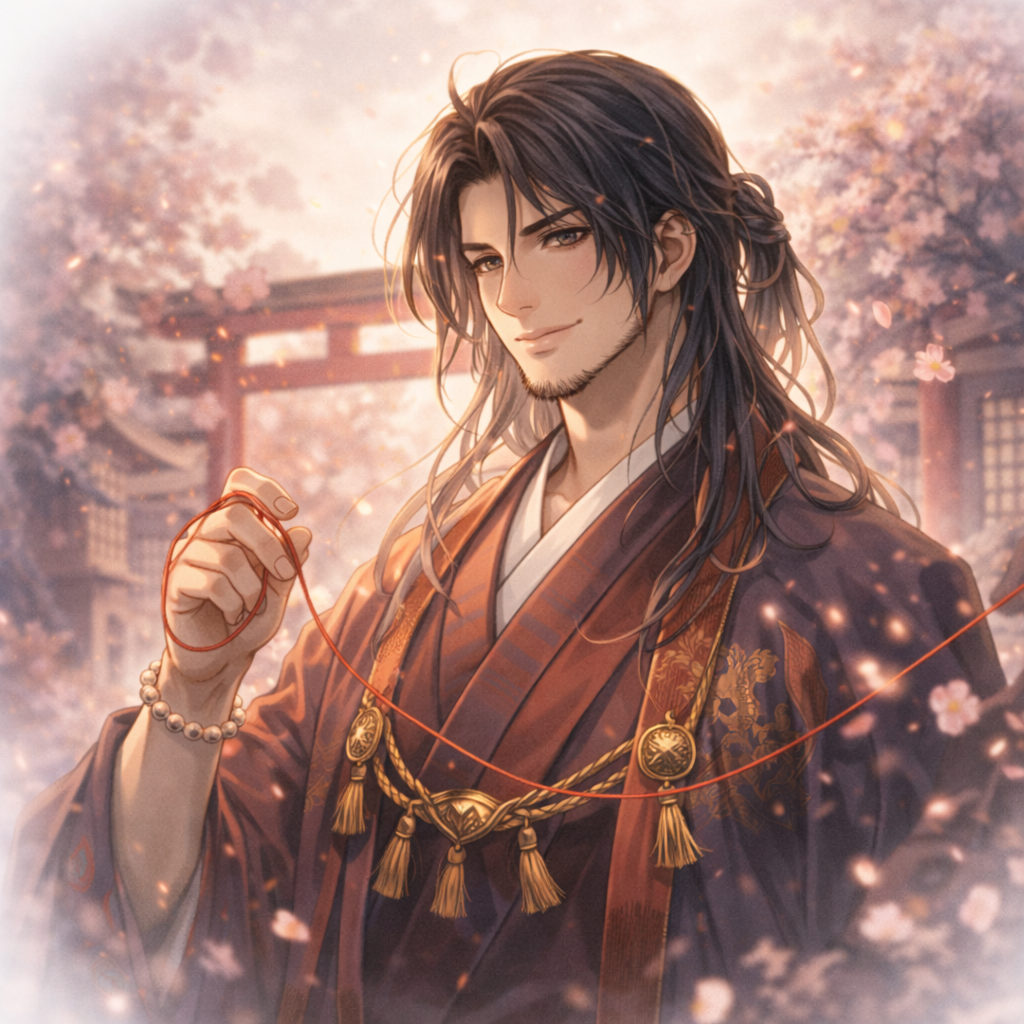
Having finished his work as a guide, Sarutahiko returned to his home in the land of Ise. At this time, Ame-no-Uzume — who had discerned his true nature — is said to have accompanied and escorted him home, and in the traditions of the Nihon Shoki line the two deities are said to have eventually married and become husband and wife. Uzume is said to have become the ancestor of the Sarume-no-Kimi clan, whose name derives from Sarutahiko, and this is recounted as the origin of a lineage involved in the rituals of the imperial court. It is striking that Uzume, who played such a role in the rock-cave myth, here again takes on the part of bridging the gap to an alien being like Sarutahiko.
His End at Azaka
After returning to Ise, Sarutahiko was fishing in the sea at Azaka (around present-day Matsusaka City, Mie Prefecture) when his hand was caught by a hirabu clam (a kind of shellfish); he sank into the sea and drowned, it is recorded. At this time, three deities are said to have been born: Sokodoku-mitama as he sank to the seabed, Tsubutatsu-mitama as the bubbles of his exhaled breath rose up, and Awasaku-mitama as those bubbles burst at the water's surface. These gods are enshrined at Azaka Shrine in Matsusaka City, Mie Prefecture. The tale of a great guiding god meeting his end caught in a clam is known as a strange and fitting legend for a deity of such unusual form.
The Form of a Monstrous Giant
The Nihon Shoki describes Sarutahiko's appearance in concrete detail. His nose was seven ata long (more than about 120 centimeters), his height was seven shaku, the corners of his mouth shone brightly, and his eyes glowed red like the Yata-no-Kagami (eight-span mirror). This superhuman, monstrous form stirred the imagination of later ages: he is sometimes said to be one of the roots of the tengu, and in festival processions he is at times represented by a performer wearing a tengu mask. It is a fitting figure for a god who stands at the boundary and clears the way — one who gathers both awe and affection.
Symbolism & character
What Sarutahiko symbolizes is the boundary, the road, and the beginning. Standing at the Yachimata where different worlds meet — heaven and earth, Takamagahara and Ashihara-no-Nakatsukuni — and clearing the way at the head of those about to set out, his figure embodies the guide one needs when stepping into the unknown. The reason he came to be identified with the Dosojin (a god enshrined at village borders and crossroads, warding off calamity from outside and protecting travelers) lies in this very character of 'standing at the boundary.' At the same time, just as it was Ame-no-Uzume who drew out his true nature, Sarutahiko — for all his overwhelming presence — is also a god who is united with others only when someone builds a bridge to him. The power to guide, and the loneliness that comes from being different: it is in holding both of these together that this god's distinctive appeal is found.
Shrines & worship
The head shrine of Sarutahiko worship throughout the country is held to be Tsubaki Okami Yashiro in Suzuka City, Mie Prefecture. It enshrines Sarutahiko together with his wife Ame-no-Uzume, and within its grounds stands the Takayama-Doko-no-Kami mausoleum, said to be the tomb of Sarutahiko. Near the Ise Grand Shrine stands Sarutahiko Shrine, which draws worshippers who pray to the 'Great God Who Opens the Way' for protection against unlucky directions, traffic safety, and prosperity in business. In addition, Futami Okitama Shrine in Futami, Ise — famed for its Meoto Iwa (Wedded Rocks) — enshrines Sarutahiko as its principal deity, and Azaka Shrine in Matsusaka, which enshrines the three gods linked to the drowning myth, is also known as an ancient shrine. As a god sought for the blessing of 'opening the way' at turning points and new departures, he continues to attract deep devotion today.
FAQ
Q. What is Sarutahiko the god of?
He is the 'god of guidance and of opening the way,' who led Ninigi and his party during the heavenly descent. He governs the road, travel, and the beginning of endeavors, and is regarded as granting blessings for traffic safety and protection against unlucky directions. In later ages he was also identified with the Dosojin who guards village borders.
Q. Where is Sarutahiko enshrined?
He is enshrined at Tsubaki Okami Yashiro (Suzuka, Mie), regarded as the head shrine for the entire country, as well as at Sarutahiko Shrine in Ise, Futami Okitama Shrine — known for its Wedded Rocks — and Azaka Shrine in Matsusaka, all in Mie Prefecture.
Q. What is the relationship between Sarutahiko and Ame-no-Uzume?
Ame-no-Uzume is the goddess who questioned Sarutahiko about his true identity during the heavenly descent and afterward escorted him to Ise. In the traditions of the Nihon Shoki line, the two are said to have become husband and wife, and Uzume is regarded as the ancestor of the Sarume-no-Kimi clan.
Q. What did Sarutahiko look like?
According to the Nihon Shoki, he was a monstrous giant with a nose seven ata long, a height of seven shaku, and eyes that glowed red like the Yata-no-Kagami (eight-span mirror). From this form he is said to be one of the origins of the tengu.
Q. What is the difference between 'Sarutabiko-no-Kami' and 'Sarutahiko-no-Mikoto'?
It is a difference of notation, and both refer to the same god. The Kojiki writes 'Sarutabiko-no-Kami,' the Nihon Shoki writes 'Sarutahiko-no-Mikoto,' and in later ages he is also called 'Sarutahiko-no-Okami.'