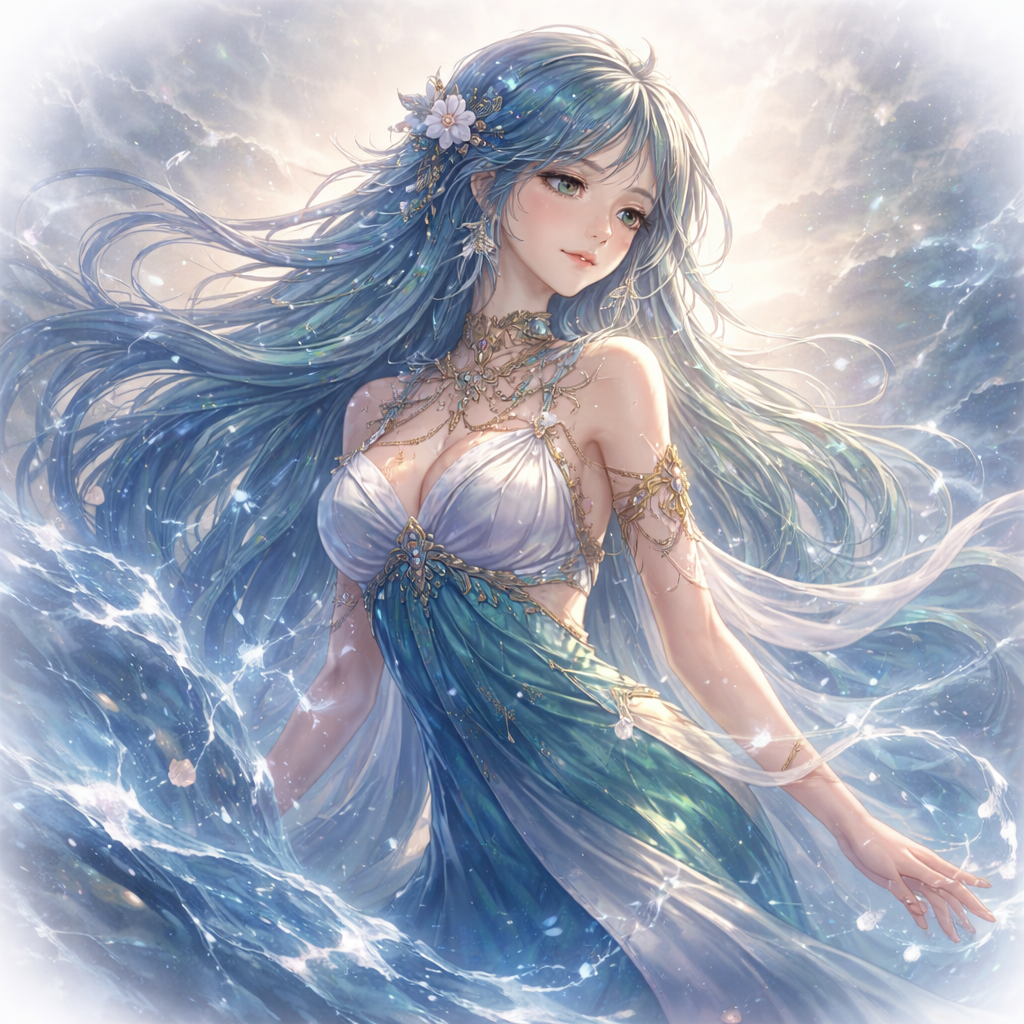
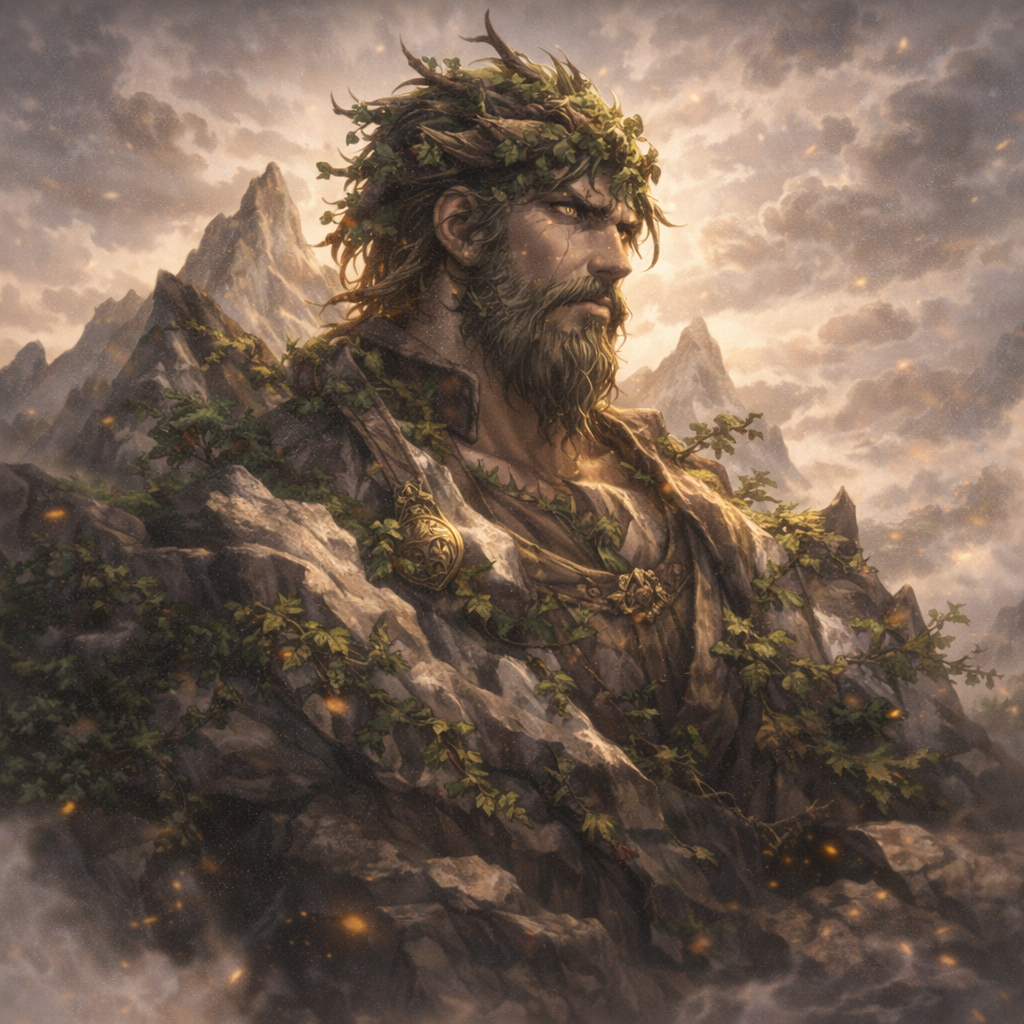
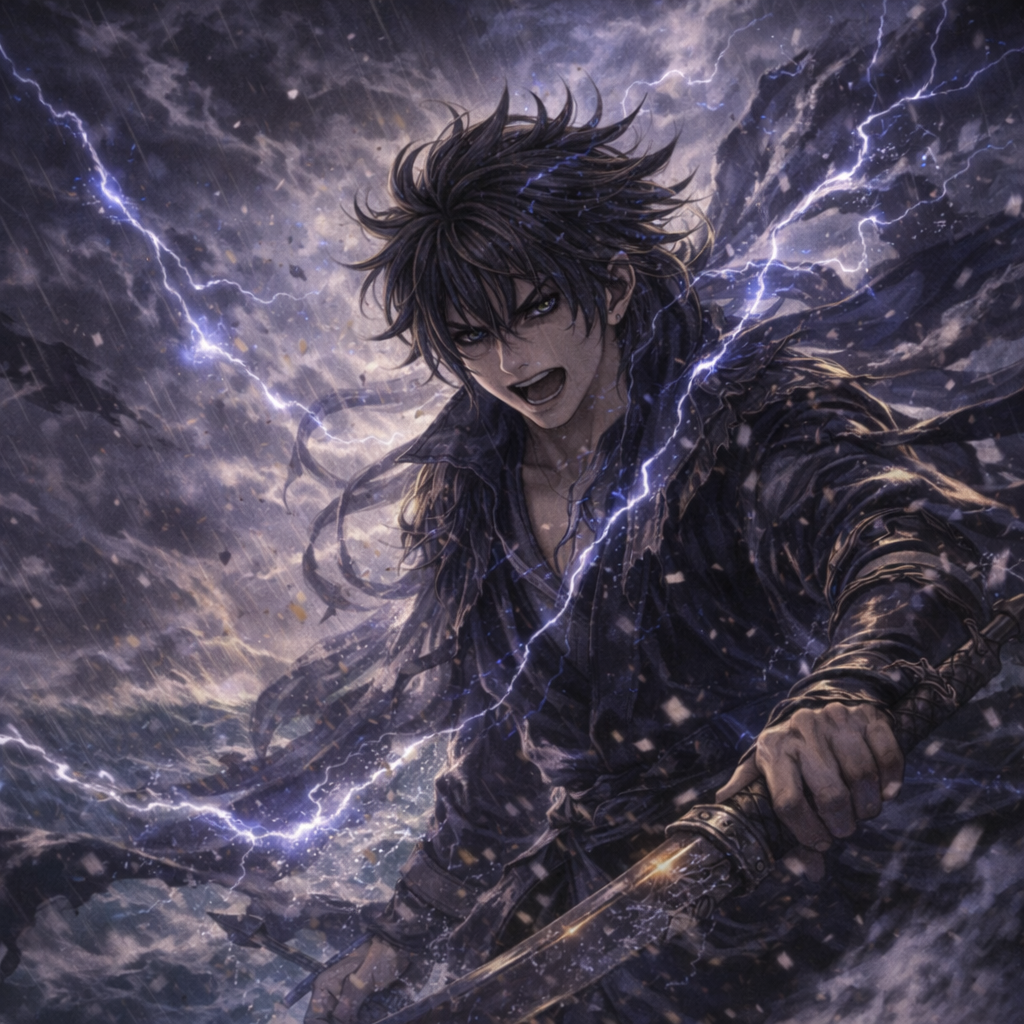
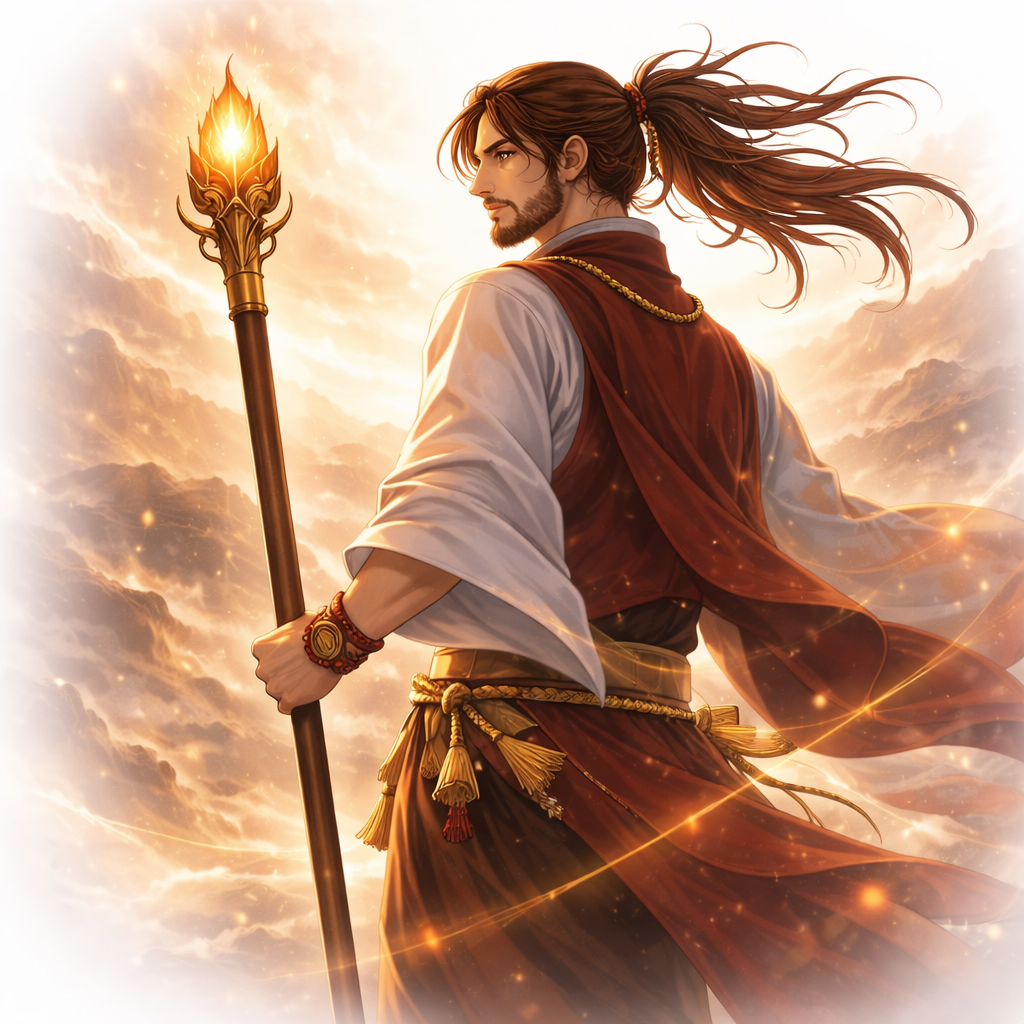
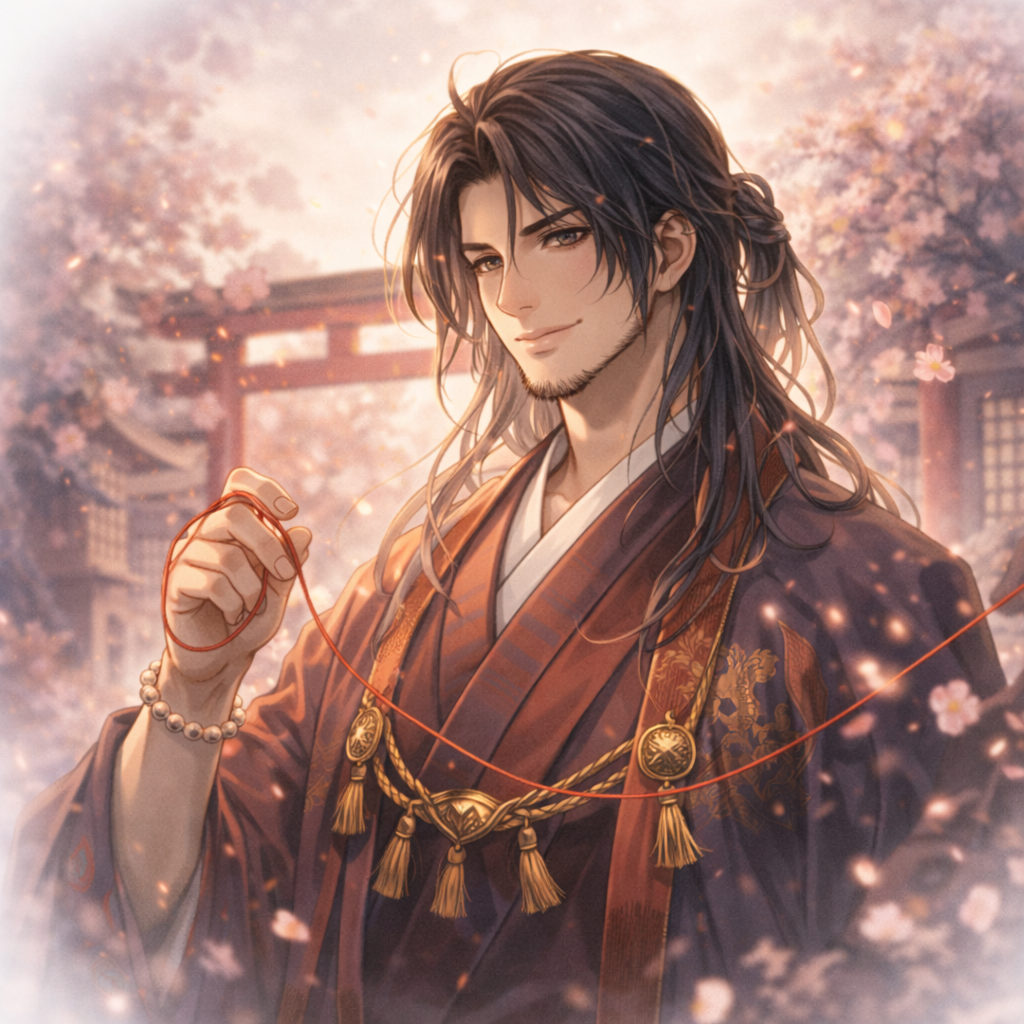
Watatsumi is the deity who rules the sea in Japanese mythology. "Wata" is an archaic word for the sea and "mi" denotes a divine spirit, so the name itself means "spirit of the sea." He is said to have been born from Izanagi's purification rite as the three Watatsumi deities—of the bottom, middle, and surface of the water—and is best known from the myth in which, as lord of the undersea palace (Watatsumi-no-Miya), he welcomes the hunter-prince Hoori. Through his daughter Toyotama he is linked to the ancestry of the imperial line, and he stands as the central divinity of the sea worship maintained by the Azumi clan of seafarers.
Mythology
The Three Watatsumi Deities Born from Purification
In the Kojiki, when Izanagi performed a purification rite (misogi) to wash away defilement after returning from the land of the dead, three deities were born as he rinsed himself at the bottom, the middle, and the surface of the water: Sokotsu-Watatsumi-no-Kami, Nakatsu-Watatsumi-no-Kami, and Uwatsu-Watatsumi-no-Kami. These are known as the three Watatsumi deities. At the same purification, the three Sumiyoshi gods also came into being, and it is striking that the gods of the sea and of seafaring all arose from a single series of cleansing acts. Separately, Owatatsumi-no-Kami appears in the episode of the birth of the gods; in either case these figures are positioned as deities "who rule the sea itself."
The Undersea Palace and Hoori — The Lost Fishhook
Watatsumi appears in myth as lord of the undersea palace (Watatsumi-no-Miya). Hoori, the hunter-prince who lost the fishhook he had borrowed from his elder brother Hoderi, the fisher-prince, journeyed to Watatsumi's palace at the bottom of the sea in search of it. Watatsumi welcomed Hoori warmly and gave him his daughter Toyotama in marriage. In time Watatsumi gathered the fish, found the lost hook, and then bestowed the tide-raising jewel (shiomitsutama) and the tide-ebbing jewel (shiofurutama), which command the rise and fall of the tides, before sending Hoori back to the surface world. With the power of these two jewels, it is told, Hoori brought his brother into submission.
The Lineage Leading to the Imperial Ancestors
After Hoori returned to the surface, the pregnant Toyotama came to him from the sea and gave birth to a child—Ugayafukiaezu-no-Mikoto. Ashamed that her form during childbirth had been seen, Toyotama returned to the sea, and her younger sister Tamayori raised the child in her place. Ugayafukiaezu later took Tamayori as his wife, and their child is said to be Emperor Jimmu (Kamuyamato-Iwarebiko), regarded as the first emperor. In this way Watatsumi, though a sea god, is placed at the very origin of an important lineage that connects to the imperial ancestors.
Ties to the Seafaring Azumi Clan
The Kojiki records that the Azumi clan, known as a people of the sea, are "descendants of Utsushihikanasaku-no-Mikoto, the child of Watatsumi." The Azumi, who in antiquity carried on maritime transport and fishing, revered Watatsumi as their ancestral deity and spread his worship to many regions. The traces of the Azumi clan—from Shikanoshima Island in Fukuoka to Azumino in the inland province of Shinano (Hotaka Shrine)—suggest the history of how Watatsumi worship spread from the sea into the interior.
Symbolism & character
Watatsumi is the deification of the sea itself—vast, deep, and endlessly rising and falling with the tides. He commands the currents, opens the sea routes, and strongly bears the character of "boundary" and "transformation," joining the two worlds of land and sea, of this world and the otherworld. His sequence of actions—receiving Hoori in the undersea palace, finding the hook, bestowing the jewels, and sending him back to the surface—tells of his aspect as master of a rite of passage, changing the one who visits and returning him. He is at once a god of abundance who brings blessings and an object of awe whose power, like storms and tides, lies beyond human understanding; this ambivalence shapes his nature as a sea god.
Shrines & worship
The head shrine of the Watatsumi and sea-god shrines throughout Japan is held to be Shikaumi Shrine on Shikanoshima Island in Fukuoka City, which enshrines the three Watatsumi deities and whose rites have been administered for generations by the seafaring Azumi clan. Also called the "Capital of the Dragon," it is known for the worship of purification (misogi-harae). Beyond this, Watatsumi is enshrined in many places centered on lands tied to the Azumi clan, such as Kaijin Shrine on Tsushima in Nagasaki Prefecture and Hotaka Shrine in Azumino. He has been deeply venerated for blessings of safety at sea, abundant catches, and protection on voyages, drawing reverence as a guardian deity of those who live by the sea.
FAQ
Q. What kind of god is Watatsumi?
He is the deity who rules the sea. Governing the ebb and flow of the tides and the sea routes, he is worshipped as a god of safety at sea, abundant catches, and protection on voyages. He is also regarded as the ancestral deity of the seafaring Azumi clan.
Q. Where is Watatsumi enshrined?
The most representative site is Shikaumi Shrine on Shikanoshima Island in Fukuoka City, held to be the head shrine of the Watatsumi and sea-god shrines throughout Japan. He is also enshrined at Kaijin Shrine on Tsushima and Hotaka Shrine in Nagano, among others.
Q. What are the three Watatsumi deities?
They are the three deities born from Izanagi's purification: Sokotsu-Watatsumi-no-Kami, Nakatsu-Watatsumi-no-Kami, and Uwatsu-Watatsumi-no-Kami. Each is said to have been born at the bottom, middle, and surface of the water, expressing the sea god as three layers.
Q. What is the relationship between Watatsumi and the imperial line?
Watatsumi's daughter Toyotama was united with Hoori, and their grandson is said to lead to Emperor Jimmu, regarded as the first emperor. Though a sea god, Watatsumi is deeply involved in the lineage of the imperial ancestors.
Q. What is the myth of Watatsumi and Hoori?
It is the story of Hoori, who lost a fishhook, visiting the undersea palace, finding the hook with Watatsumi's help, and returning to the surface with jewels that command the tides. Watatsumi gave his daughter Toyotama to Hoori in marriage.
Your Core might be Watatsumi
Discover which of the 12 gods mirrors you — from your birth date and 6 short questions (30 sec, free).
Take the test →