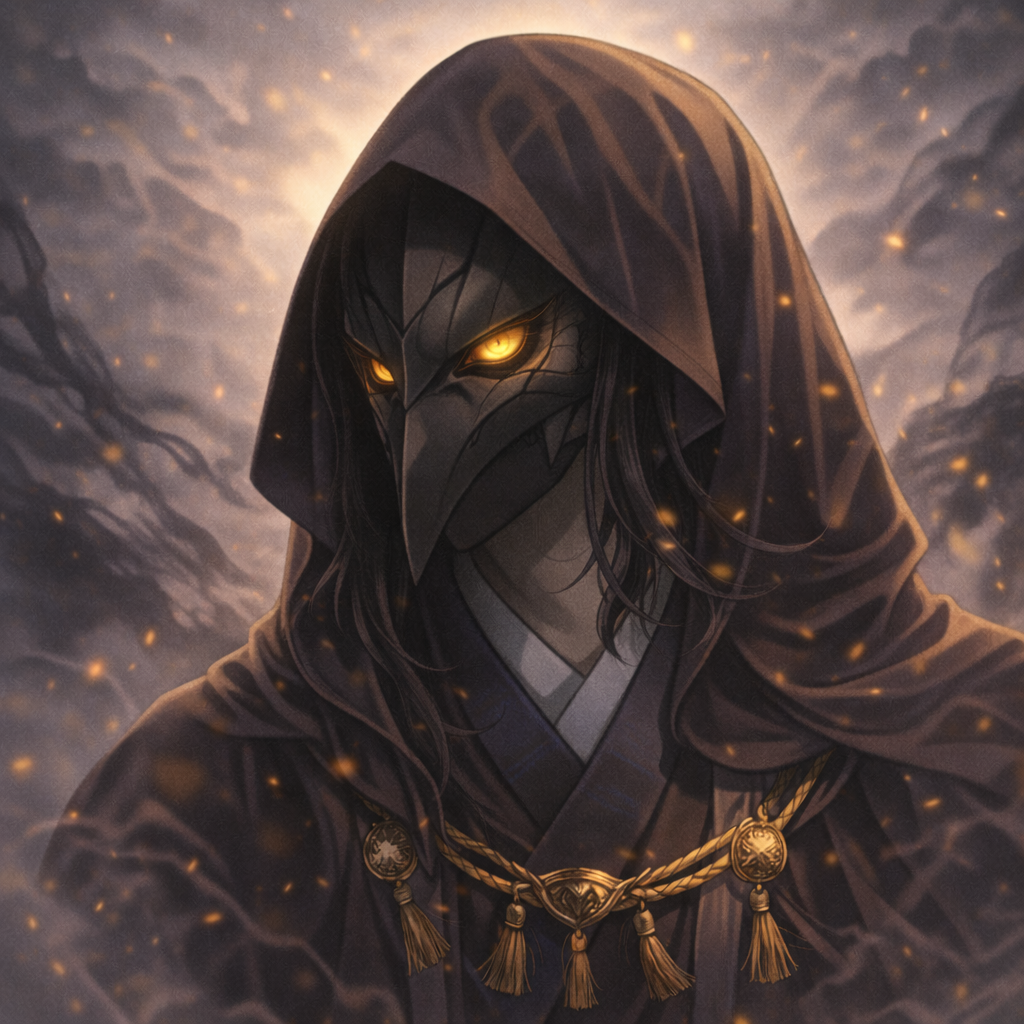
What Is Yatagarasu — The Three-Legged Divine Crow That Guided Emperor Jimmu
Yatagarasu
Yatagarasu (the eight-span crow) / Atama-Yatagarasu / regarded as the incarnation of Kamotaketsunumi-no-Mikoto. Also widely known as the three-legged crow on the emblem of Japan's national soccer team.
Yatagarasu is a three-legged crow in Japanese mythology that guided Emperor Jimmu's company from Kumano to Yamato during his eastern campaign. Said to have been dispatched as a divine messenger by Amaterasu (or Takagi-no-Kami), the crow has been revered as a symbol of "guidance" and "opening the way." In later tradition it is also said to be the incarnation of Kamotaketsunumi-no-Mikoto, the ancestral deity of the Kamo clan.
Quick facts
Divine role
Divine messenger (shinshi) and a numinous bird of guidance. Also regarded as an incarnation of the sun.
Form
A large three-legged crow. "Yata" means "large and broad."
Gender
Has no clearly defined gender (existing as a divine messenger and sacred bird).
Dispatching deity
In the Nihon Shoki, Amaterasu; in the Kojiki, Takagi-no-Kami (Takamimusubi).
Identified with
Kamotaketsunumi-no-Mikoto, the ancestral deity of the Kamo clan, who is said to have taken the form of Yatagarasu.
Related parentage
Through Kamotaketsunumi-no-Mikoto, the line continues to his daughter Tamayori-hime-no-Mikoto and his grandson Kamowakeikazuchi-no-Mikoto (enshrined deity of Kamigamo Shrine).
Sources
The Kojiki and the Nihon Shoki (the chapters on Jimmu's eastern campaign).
Blessings
Guidance, opening the way, victory, traffic safety, protection against unlucky directions, and more.
Major shrines
Yatagarasu Shrine (Uda, Nara); the Kumano Sanzan (Kumano Hongu Taisha, Hayatama Taisha, Nachi Taisha); Kamo-mioya Shrine, i.e. Shimogamo Shrine (Kyoto).
Mythology
The Guide of Jimmu's Eastern Campaign
Having set out from Hyuga, the company of Kamuyamato-Iwarebiko-no-Mikoto (the future Emperor Jimmu) was struck down in Kumano by the venomous breath of a wild deity and lost their way in the mountains. It was then that Yatagarasu was sent from heaven. In the Nihon Shoki, Amaterasu appears in Jimmu's dream and announces that she will send the crow; in the Kojiki, Takagi-no-Kami (Takamimusubi) conveys the divine will to Takakuraji and sets the crow as a guide. Yatagarasu led the way along the rugged mountain paths and brought the company safely to the land of Yamato. The difference between the texts as to which deity sent the crow is well known as one of the principal variant accounts of the Yatagarasu tradition.
The Meaning of the Three Legs
Yatagarasu is depicted with three legs. These three legs are generally interpreted as representing the three powers of "heaven, earth, and humanity," and, linked to solar worship, the bird is described as a "numinous creature dwelling within the sun." It is thought that the ancient Chinese notion of the three-legged crow (sansoku-u) inhabiting the sun merged with Japanese crow worship. The image symbolizes how the crow was regarded not as an ordinary bird but as a sacred divine messenger conveying the will of heaven to the earthly realm.
Syncretism with Kamotaketsunumi-no-Mikoto
The Yatagarasu tradition was originally handed down among the local clans of the Uda region in Yamato, but from the eighth century onward, as the Kamo-no-Agatanushi of Yamashiro (Kyoto) rose to prominence, it came to be told that Kamotaketsunumi-no-Mikoto, the ancestral deity of the Kamo clan, had taken the form of Yatagarasu to guide Emperor Jimmu. Kamotaketsunumi-no-Mikoto is held to belong to the lineage of Kamumusubi, and the line continuing through his daughter Tamayori-hime-no-Mikoto and his grandson Kamowakeikazuchi-no-Mikoto forms the core of the faith of the two Kyoto shrines, Kamigamo and Shimogamo.
Symbolism & character
Yatagarasu is not a protagonist deity who rules a land or wages war, but a "divine messenger of guidance" who points out the path to be taken. Appearing before those who have lost their direction amid confusion and darkness, it leads them onto the right course. This character overlaps with the figure of an observer who, rather than asserting loudly, perceives the essence of things and quietly illuminates the way. It is also notable that the crow—a bird often regarded as ominous—is told of as a sacred guide, making it a being that symbolizes "an eye that sees through things from outside conventional wisdom." The three legs indicate its role as a mediator linking heaven, earth, and humanity, lending it the character of a bridge between different worlds.
Shrines & worship
The earliest recorded enshrinement of Yatagarasu as a deity is said to be at Yatagarasu Shrine in Uda, Nara Prefecture; the Shoku Nihongi records that a Yatagarasu shrine was venerated in the second year of Keiun (705), under Emperor Monmu. At the Kumano Sanzan on the Kii Peninsula (Kumano Hongu Taisha, Kumano Hayatama Taisha, and Kumano Nachi Taisha), Yatagarasu is fervently revered as the divine messenger of the great Kumano deities and is widely used as a symbol of Kumano on shrine banners and amulets. Kamo-mioya Shrine (Shimogamo Shrine) in Kyoto enshrines Kamotaketsunumi-no-Mikoto, regarded as the incarnation of Yatagarasu. As a symbol of "guidance" and "victory," the three-legged crow has also been adopted as the emblem of Japan's national soccer team, keeping it familiar in the present day.
FAQ
Q. What kind of deity is Yatagarasu?
Rather than a presiding deity who rules a particular domain, Yatagarasu is a "divine messenger" who points out the way. Because it guided Jimmu's company from Kumano to Yamato during the eastern campaign, it is revered as a symbol of guidance, opening the way, and victory.
Q. Where is Yatagarasu enshrined?
It is enshrined at Yatagarasu Shrine in Uda, Nara Prefecture; at the Kumano Sanzan (the grand shrines of Hongu, Hayatama, and Nachi); and at Kamo-mioya Shrine (Shimogamo Shrine) in Kyoto. The Yatagarasu Shrine in Uda is said to be the earliest recorded shrine to enshrine Yatagarasu.
Q. Why does it have three legs?
The three legs are said to represent the three powers of "heaven, earth, and humanity," and are described in connection with the notion of a numinous bird dwelling in the sun. It is thought that the ancient Chinese idea of the three-legged crow (the crow within the sun) merged with Japanese crow worship.
Q. Who dispatched Yatagarasu?
This differs by text. In the Nihon Shoki, Amaterasu appears in Emperor Jimmu's dream and sends the crow; in the Kojiki, Takagi-no-Kami (Takamimusubi) sets it as a guide through Takakuraji.
Q. What is its relationship to Kamotaketsunumi-no-Mikoto?
In later tradition, it came to be told that Kamotaketsunumi-no-Mikoto, the ancestral deity of the Kamo clan, had taken the form of Yatagarasu to guide Emperor Jimmu. Shimogamo Shrine enshrines this Kamotaketsunumi-no-Mikoto.