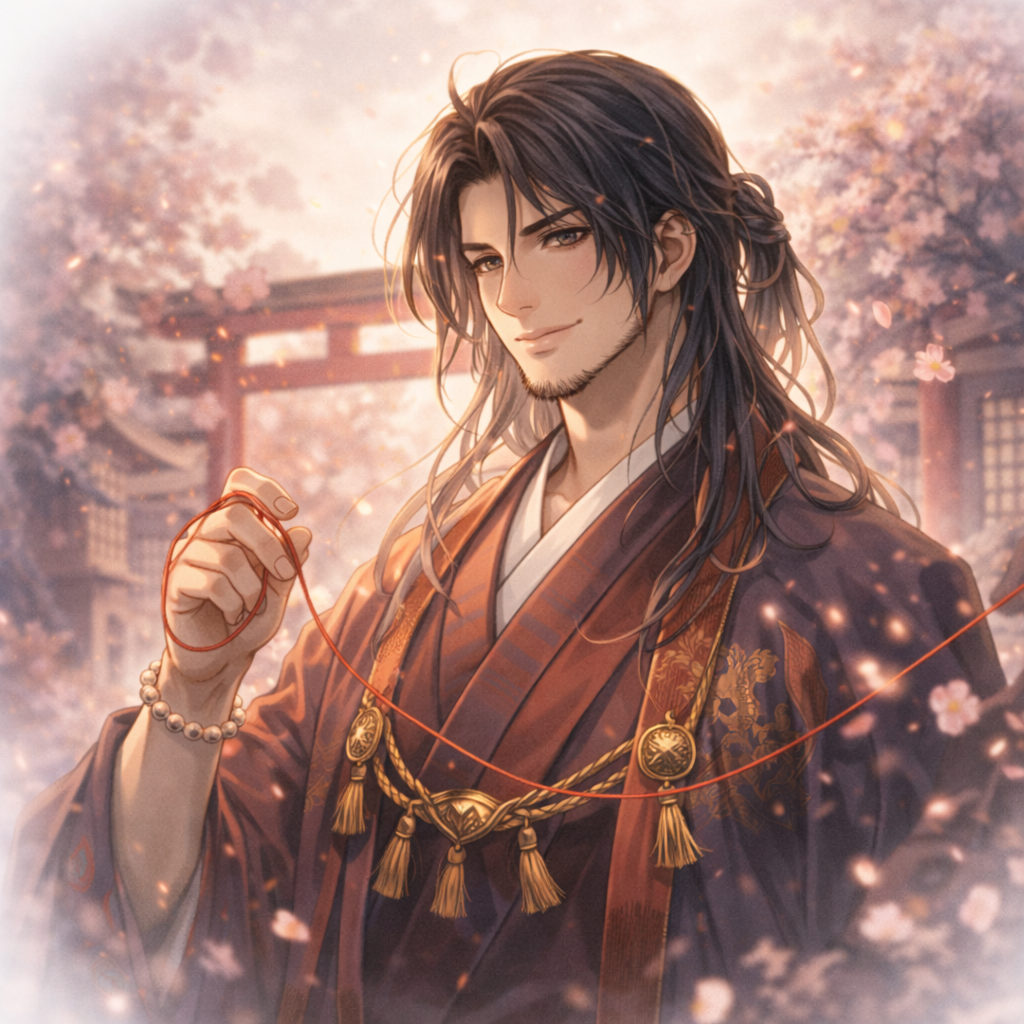
Kuniyuzuri (the Transfer of the Land) is a Japanese myth in which Amaterasu, ruler of Takamagahara, seeks sovereignty over the Central Land of the Reed Plains (the earthly world) governed by Okuninushi. After several envoys, she dispatches Takemikazuchi, and Okuninushi ultimately cedes the land. As a condition of the transfer, a magnificent palace—said to be the origin of Izumo Taisha—is built, where Okuninushi takes up his dwelling. Leading into the subsequent Descent of the Heavenly Grandson, it is the pivotal story that closes the cycle of Izumo myth.
| Principal source texts | The Kojiki and the Nihon Shoki (with related traditions in the Izumo no Kuni Fudoki) |
|---|---|
| Main settings | Takamagahara (the High Plain of Heaven), the Central Land of the Reed Plains, and the little shore of Izasa (Inasa) (Izumo City, Shimane Prefecture) |
| Main deities involved | Amaterasu, Takamimusuhi (Takagi-no-kami), Takemikazuchi, Okuninushi, Kotoshironushi, and Takeminakata |
| Envoys dispatched | Amenohohi → Amenowakahiko → Takemikazuchi (in the Kojiki; in the Nihon Shoki, Futsunushi is the principal envoy) |
| Place in the narrative | The close of the Izumo myth cycle; the pacification of the earthly realm that sets the stage for the Descent of the Heavenly Grandson |
| Associated shrines | Izumo Taisha (Shimane), Kashima Jingu (Ibaraki), Suwa Taisha (Nagano), and others |
Amaterasu, who rules Takamagahara (the High Plain of Heaven, the realm of the heavenly deities), declares that the earthly Central Land of the Reed Plains (Ashihara no Nakatsukuni) should likewise be governed by her own descendants. At that time, however, the Central Land of the Reed Plains was already ruled by Okuninushi, a descendant of Susanoo, who had completed the work of building the land with the aid of Sukunabikona and others. The heavenly deities therefore resolve to send envoys down from Takamagahara in order to receive sovereignty over the earth peacefully. This whole sequence of negotiation and pacification is known as the Kuniyuzuri, the Transfer of the Land.
The first to be sent was Amenohohi. But he became devoted to Okuninushi, behaving almost like one of his retainers, and after three years he had still not reported back to Takamagahara. The next envoy, Amenowakahiko, took Okuninushi's daughter Shitateruhime as his wife and settled into earthly life; after eight years he too had not returned. To discover what was happening, Takamagahara sent the pheasant Nanakime, but Amenowakahiko shot her dead with bow and arrow. The arrow flew all the way up to heaven, and Takamimusuhi (Takagi-no-kami) hurled it back, declaring, "If he harbors an evil heart, let it strike him." The returning arrow pierced Amenowakahiko through the chest and took his life. In this way, every attempt at peaceful negotiation came to nothing.
The heavenly deities then dispatched Takemikazuchi, the deity of martial power. Takemikazuchi descended upon the little shore of Izasa (Inasa) and, in a posture of overwhelming menace, drove his Totsuka no Tsurugi (ten-span sword) upside down into the crest of the waves and sat cross-legged upon its blade, pressing Okuninushi to cede the land. Okuninushi entrusted the decision to his sons. The elder son, Kotoshironushi, agreed at once, transforming his boat into a fence of green branches (aofushigaki) and concealing himself within it. But another son, Takeminakata, refused and challenged Takemikazuchi to a trial of strength. When Takeminakata tried to seize Takemikazuchi's arm, it turned into a pillar of ice and then a sword; in turn, Takeminakata's own arm was crushed and he was defeated. Pursued as far as Lake Suwa in the land of Shinano (Shinano), he swore his submission.
With both his sons submitting, Okuninushi consents to the transfer of the land. As his condition, he asks that a magnificent palace be built to enshrine him—the towering "Ame no Hisumi no Miya," said to be the origin of the later Izumo Taisha. His wish is granted, and Okuninushi takes up his dwelling in Izumo as the deity who governs the kakurigoto (the unseen affairs—sacred and spiritual matters), while the arawagoto (the visible affairs—the actual governance of the earth) is entrusted to the descendants of the heavenly deities. The completion of this transfer opens the way for the subsequent Descent of the Heavenly Grandson—the descent to earth of Ninigi, the grandson of Amaterasu.
In the Kojiki, Takemikazuchi is the central figure in the negotiations, but in the main text of the Nihon Shoki, Futsunushi is portrayed as the principal envoy, with Takemikazuchi appearing in a supporting role. The episode of Takeminakata and his flight to Suwa appears in the Kojiki but not in the main text of the Nihon Shoki. In historical scholarship, one view regards this story as a mythological reflection of the process by which the powers of Izumo (a local, earth-rooted sphere of belief) were integrated into the Yamato sovereignty—understood not as literal history but as an origin narrative that articulates a political and religious order.
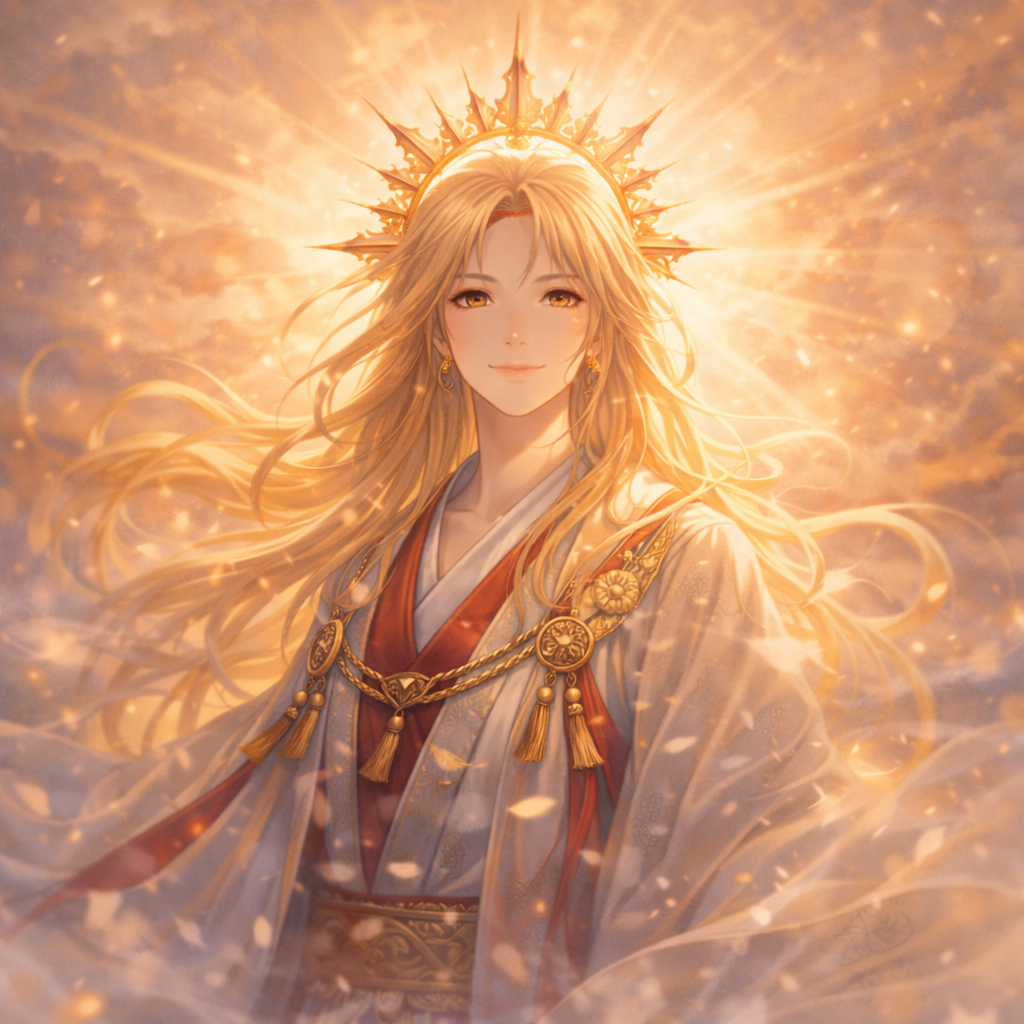 AmaterasuThe presiding deity of Takamagahara. Wishing to rule the Central Land of the Reed Plains, she orders the dispatch of envoys, setting the Transfer of the Land in motion.OkuninushiThe Izumo deity of land-building who had been governing the Central Land of the Reed Plains. The central figure of the story, he cedes the land and takes up his dwelling at Izumo Taisha.