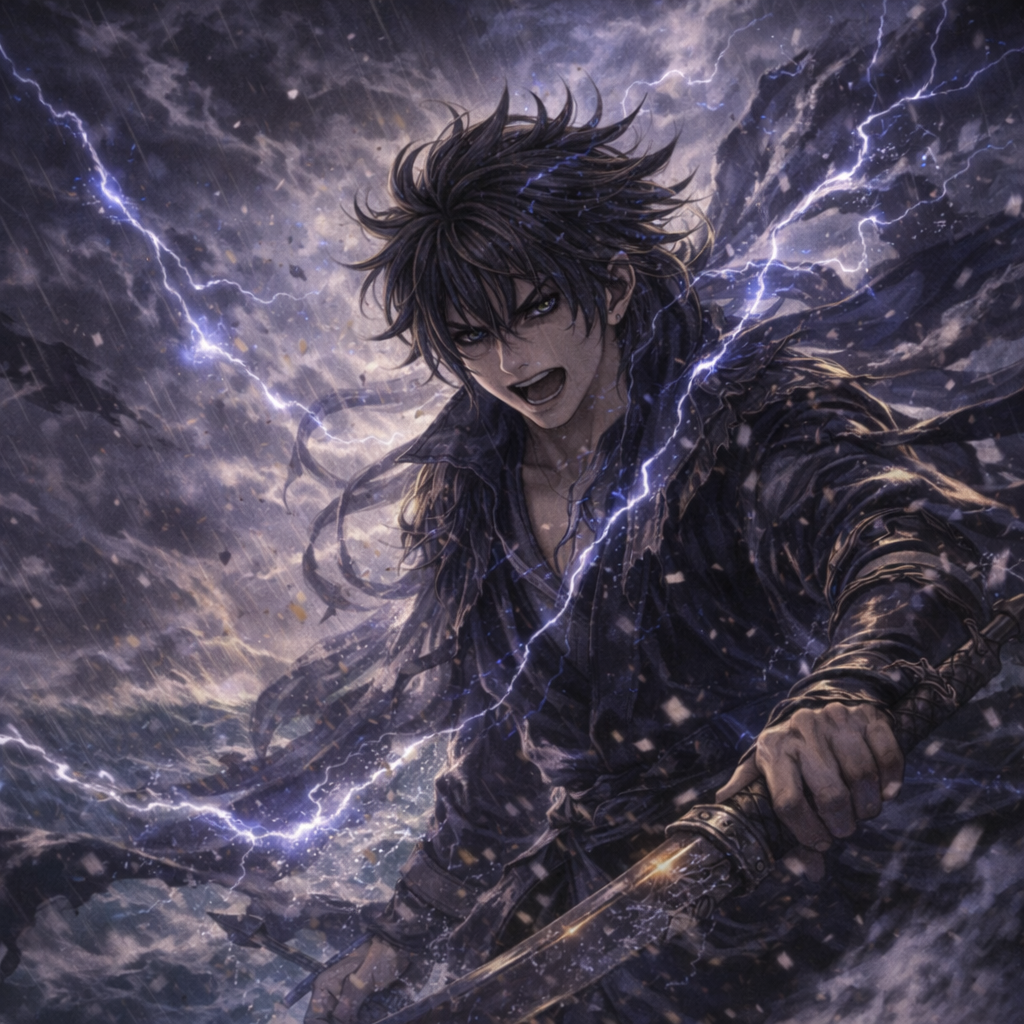
The Slaying of Yamata-no-Orochi is a Japanese myth in which Susanoo, banished from Takamagahara, descends to the land of Izumo and defeats Yamata-no-Orochi, an eight-headed serpent that devours a maiden every year. Susanoo intoxicates the serpent with strong sake, cuts it down, and discovers the Kusanagi sword (Ame-no-Murakumo) in its tail, which he offers to Amaterasu. The story is known as the tale of a wild, unruly god—once exiled for his violence—transforming into a hero.
| Main sources | Kojiki (written 八俣遠呂智) / Nihon Shoki (written 八岐大蛇) |
|---|---|
| Main setting | Izumo: Torikami, at the upper reaches of the Hi River (the Hii River); and the land of Suga |
| Principal deities | Susanoo, Kushinada, and Ashinazuchi & Tenazuchi |
| Sacred treasure obtained | The Kusanagi sword (Ame-no-Murakumo) — one of the Three Sacred Treasures |
| Significance | A hero's tale following Susanoo's banishment; the starting point of the Izumo mythology |
Susanoo, whose conduct had driven Amaterasu to hide in the Heavenly Rock Cave, was held responsible for his violent behavior and banished by the gods from Takamagahara, the realm of the deities. The place where he descended to earth was Torikami, at the upper reaches of the Hi River (identified with the present-day Hii River) in the land of Izumo. As Susanoo gazed at the river, he noticed a single chopstick floating downstream. Reasoning that people must live upstream, he followed the river up and came upon an elderly couple and a young girl, all weeping.
The elderly couple were Ashinazuchi and Tenazuchi, children of Oyamatsumi, the god of the mountains, and the girl was their daughter Kushinada (written Kushinada-hime in the Kojiki and Kushiinada-hime in the Nihon Shoki). The couple had originally had eight daughters, but each year Yamata-no-Orochi appeared and devoured one of them. Now only Kushinada remained, and she too was about to be eaten. Susanoo offered to slay the serpent on the condition that he be allowed to take Kushinada as his wife. Since ancient times, Kushinada has been understood as a goddess of the rice paddies, symbolizing the cultivated fields.
Yamata-no-Orochi was an enormous monster with eight heads and eight tails, eyes red as winter-cherry, moss and cypress and cedar growing on its body, and a length spanning eight valleys and eight peaks. Susanoo transformed Kushinada into a sacred comb (yutsutsumagushi) and placed it in his own hair, then had a strong sake called yashiori-no-sake, brewed by refining it eight times, prepared. Setting a tub of sake at each of eight gates, he watched as the serpent plunged each of its eight heads into a tub, drank the sake, grew drunk, and fell asleep. Seizing the moment, Susanoo cut the serpent to pieces with his sword, the Totsuka-no-Tsurugi.
As he hacked the serpent apart, the blade of his sword chipped when he reached one of its tails. Suspicious, he split the tail open and found a divine sword inside. This was Ame-no-Murakumo-no-Tsurugi, later known as the Kusanagi sword—one of the Three Sacred Treasures. Recognizing it as a wondrous object, Susanoo presented the sword to his elder sister Amaterasu. The name Kusanagi ("grass-mower") is said to derive from a later episode in which Yamato-Takeru, during his eastern campaign, escaped a burning field by mowing down the grass around him.
Having slain the serpent, Susanoo wandered through Izumo with Kushinada in search of a place to settle. On reaching the land of Suga, he declared, "Coming here, my heart feels fresh and clear," and built a palace where he settled down. There he is said to have composed the verse, "Many clouds arise—in Izumo, an eightfold fence; to enclose my wife, I build an eightfold fence; oh, that eightfold fence," which is handed down as the oldest Japanese poem and the origin of waka. The story marks the turning point at which the wild, unruly god—once banished for his violence—is recast as a hero and as the founder of the poetic tradition.
SusanooThe hero of the story. After his banishment from Takamagahara, he slays Yamata-no-Orochi in Izumo and is transformed into a heroic deity.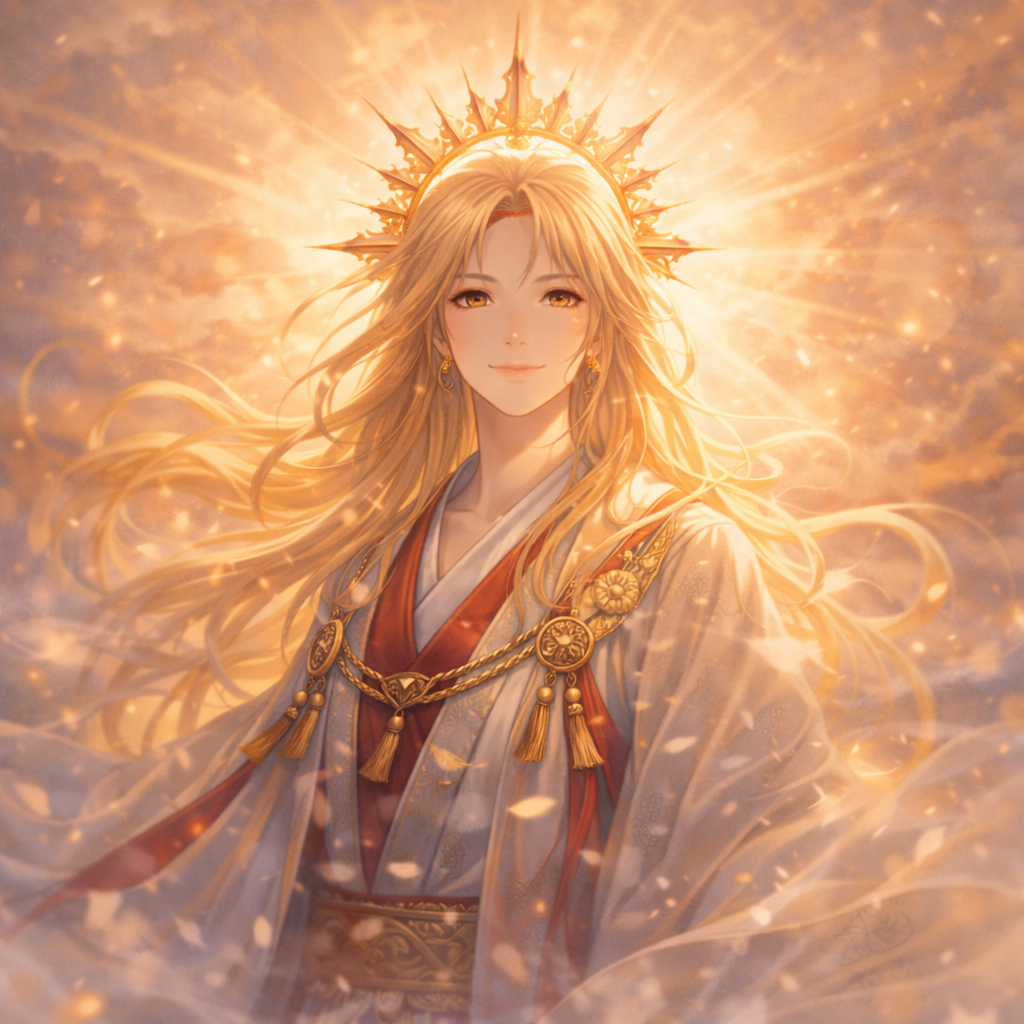 AmaterasuSusanoo's elder sister. After the slaying, she receives the Kusanagi sword (Ame-no-Murakumo) obtained from the serpent's tail.
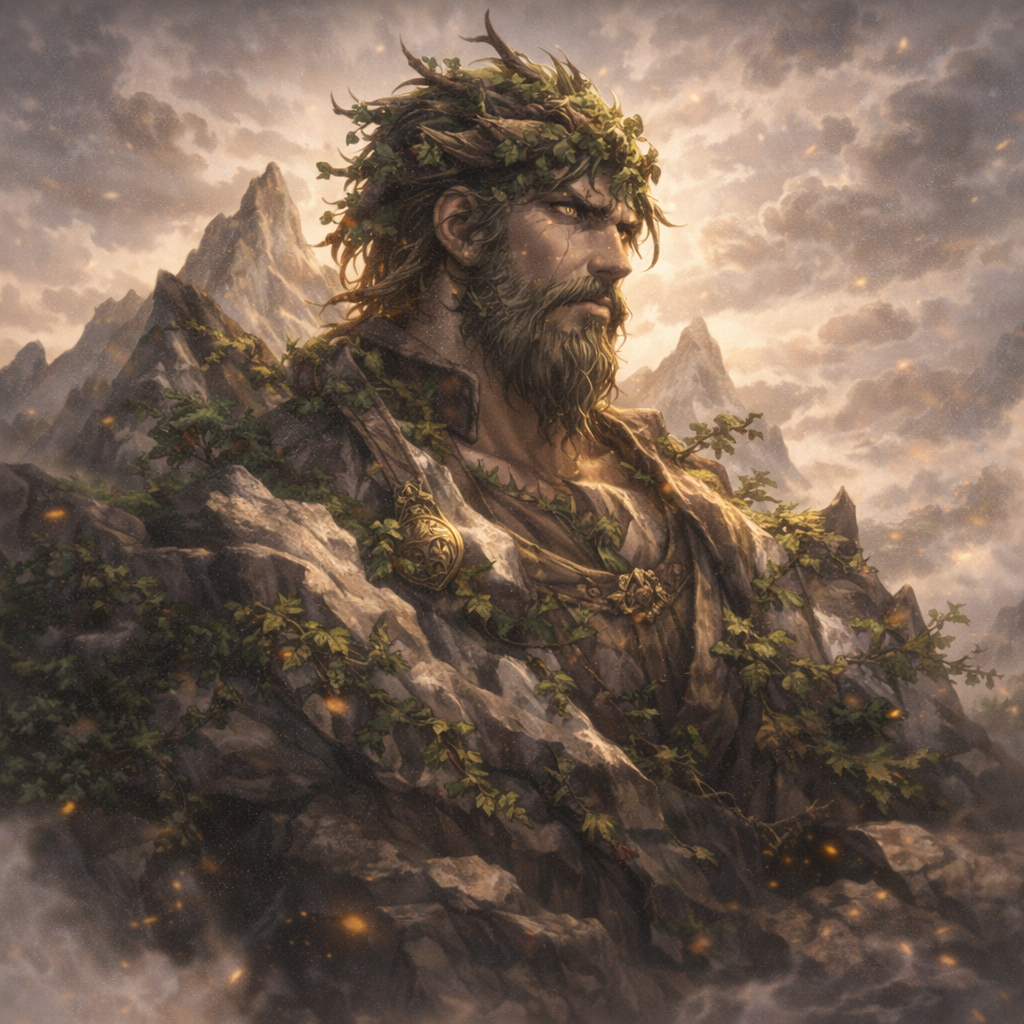 OyamatsumiThe god of the mountains, regarded as the parent deity of Kushinada's father Ashinazuchi and mother Tenazuchi.