The Three Sacred Treasures — The Three Regalia That Symbolize the Imperial Throne
The Three Sacred Treasures (Sanshu no Jingi) are the collective name for three treasures — Yata no Kagami (the mirror), Kusanagi no Tsurugi (the sword), and Yasakani no Magatama (the jewel) — regarded as symbols of the Imperial throne. They originate, respectively, in the Heavenly Rock Cave myth, the slaying of Yamata no Orochi, and again the Rock Cave myth, and are said to have been bestowed by Amaterasu upon her grandson Ninigi at the time of the descent of the heavenly grandchild.
Category
Three treasures regarded as symbols of the Imperial throne (mirror, sword, jewel)
Composition
Yata no Kagami, Kusanagi no Tsurugi (Ame no Murakumo no Tsurugi), Yasakani no Magatama
Principal sources
Kojiki and Nihon Shoki (variant text)
Source myths
The Heavenly Rock Cave (mirror, jewel) / the slaying of Yamata no Orochi (sword) / the descent of the heavenly grandchild (bestowal)
Present locations
Yata no Kagami at the Inner Shrine of Ise Jingu / Kusanagi no Tsurugi at Atsuta Jingu / Yasakani no Magatama at the Imperial Palace (replicas of the mirror and sword are enshrined within the palace)
Reading
Sanshu no Jingi (also read Sanshu no Shinki)
What Are the Three Sacred Treasures?
The Three Sacred Treasures are the collective name for three treasures — Yata no Kagami (the mirror), Kusanagi no Tsurugi (the sword, also called Ame no Murakumo no Tsurugi), and Yasakani no Magatama (the jewel) — and have long been regarded as symbols of the legitimacy of the Imperial throne. In Japanese mythology they appear within separate stories and are finally brought together in the scene of the descent of the heavenly grandchild, when they are carried down to earth. The Kojiki records that Amaterasu (Amaterasu Omikami) bestowed upon her grandson Ninigi "the Yasakani magatama, the mirror, and also the Kusanagi sword." The main text of the Nihon Shoki contains no passage in which all three are bestowed together; rather, one of its variant accounts states that "the Yasakani curved jewel, together with the Yata mirror and the Kusanagi sword — these three treasures — were granted," and the two works are known to treat the matter differently.
Yata no Kagami and Yasakani no Magatama — The Mirror and Jewel of the Rock Cave Myth
The mirror and the jewel both originate in the Heavenly Rock Cave myth. When Amaterasu, grieved by the violence of her brother Susanoo, hid herself within the heavenly rock cave and the world was plunged into darkness, the gods devised a plan to lure her out. In the course of this, Ishikoridome made the mirror and Tamanooya made the magatama, and these were hung upon the branches of a sakaki tree held aloft by Futodama. This mirror is Yata no Kagami, and this jewel is Yasakani no Magatama. Yata no Kagami later came to be regarded as the very vessel (yorishiro) of the imperial ancestral deity Amaterasu herself, and was held in especially high esteem among the treasures.
Kusanagi no Tsurugi — The Divine Sword from the Tail of Yamata no Orochi
The sword originates in Susanoo's slaying of Yamata no Orochi. When Susanoo, having descended to the land of Izumo, slew the eight-headed serpent Yamata no Orochi, a sword emerged from its tail. This was originally named Ame no Murakumo no Tsurugi, and Susanoo is said to have presented it to Amaterasu in the High Plain of Heaven. The name "Kusanagi no Tsurugi" (Grass-Mowing Sword) derives from a later story: according to the Nihon Shoki and other sources, in the reign of Emperor Keiko, when Yamato Takeru was caught in a fire attack at Suruga Province (around present-day Yaizu, Shizuoka Prefecture) during his eastern campaign, this sword mowed down the grass and allowed him to escape danger, and so it received its name.
Bestowal at the Descent of the Heavenly Grandchild and the Symbolization of the Throne
These three treasures are joined into one in the scene of the descent of the heavenly grandchild. When Amaterasu sent down her grandson Ninigi to rule the earth (Ashihara no Nakatsukuni), she is said to have bestowed upon him the Three Sacred Treasures along with rice ears. Because this lineage was held to be the origin of the Imperial house, the Three Sacred Treasures came to be positioned as treasures symbolizing the succession of the throne through the generations. In later ages, a practice developed in which the originals were not moved directly but replicas, called katashiro, were kept within the palace instead.
Present Locations and Worship
Today the original Yata no Kagami is said to be enshrined at the Inner Shrine (Kotai Jingu) of Ise Jingu in Mie Prefecture, and the original Kusanagi no Tsurugi at Atsuta Jingu in Nagoya, Aichi Prefecture. After the death of Yamato Takeru, the sword continued to be venerated under his wife Miyazuhime and the Owari clan, and this is said to be the origin of Atsuta Jingu. The Yasakani no Magatama, together with the replicas of the mirror and sword, is enshrined at the Imperial Palace, forming the center of ritual alongside the Kashikodokoro and the other Three Palace Sanctuaries. These originals are held to be sacred treasures that not even the Emperor looks upon directly, and replicas are used at the time of enthronement.
They are the collective name for three treasures — Yata no Kagami, Kusanagi no Tsurugi, and Yasakani no Magatama — said to symbolize the legitimacy of the Imperial throne. They are believed to have been bestowed by Amaterasu upon her grandson Ninigi at the descent of the heavenly grandchild.
Q. Where did each of the Three Sacred Treasures come from?
Yata no Kagami and Yasakani no Magatama were made during the Heavenly Rock Cave myth, while Kusanagi no Tsurugi (Ame no Murakumo no Tsurugi) emerged from the tail of Yamata no Orochi when Susanoo slew it.
Q. Where does the name Kusanagi no Tsurugi come from?
Its original name was Ame no Murakumo no Tsurugi. When Yamato Takeru was caught in a fire attack in Suruga Province, this sword mowed down the grass and allowed him to escape danger, and so it came to be called Kusanagi no Tsurugi (Grass-Mowing Sword).
Q. Where are the Three Sacred Treasures today?
The original Yata no Kagami is said to be enshrined at the Inner Shrine of Ise Jingu, the original Kusanagi no Tsurugi at Atsuta Jingu, and the Yasakani no Magatama along with replicas of the mirror and sword at the Imperial Palace. The originals are held to be sacred treasures that cannot be looked upon directly.
The Slaying of Yamata-no-Orochi — The slaying tale in which Kusanagi no Tsurugi (Ame no Murakumo no Tsurugi) emerged from the serpent's tail
Tenson Korin — The Heavenly Descent — The descent of the heavenly grandchild, in which the Three Sacred Treasures were bestowed upon Ninigi and brought to earth
Which god mirrors you?
Discover which of the 12 gods mirrors you — from your birth date and 6 short questions (30 sec, free).
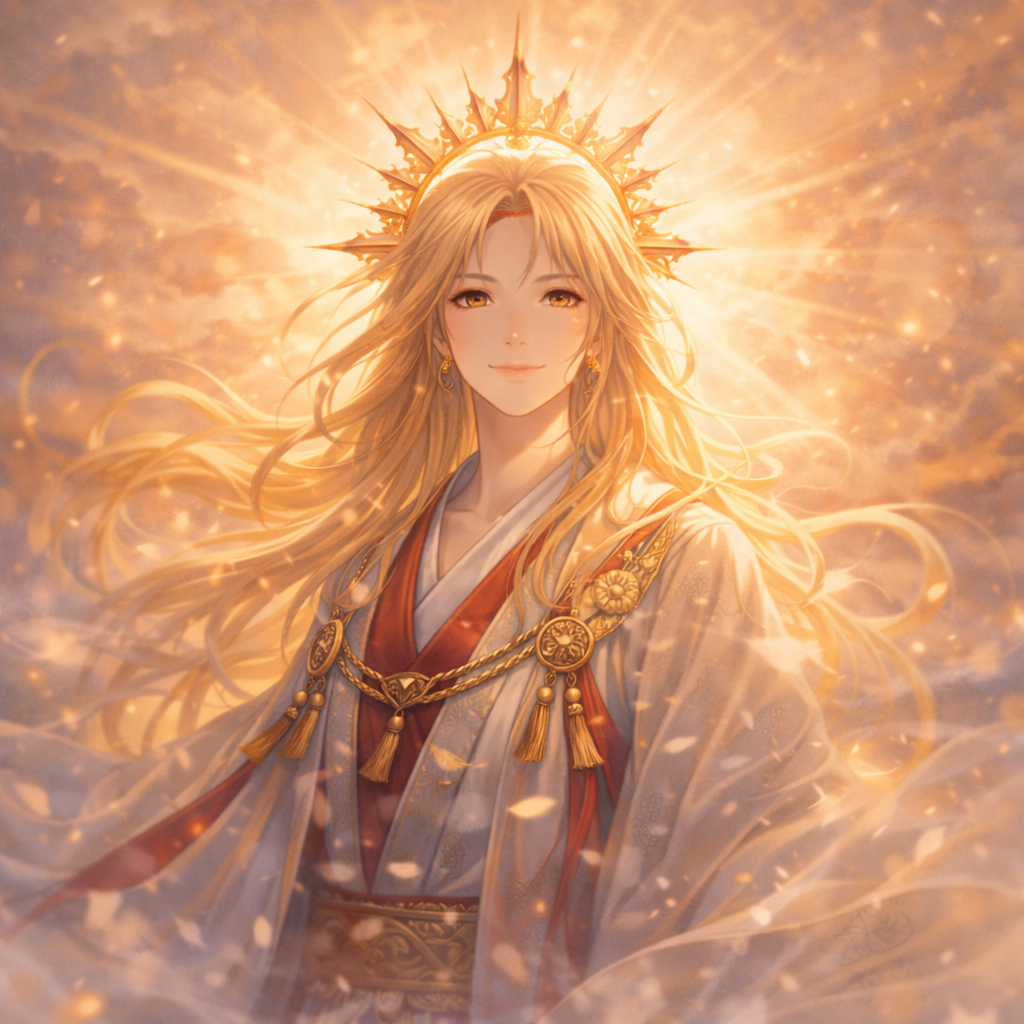 AmaterasuThe imperial ancestral deity. The central figure: the mirror and jewel were made in the Rock Cave myth, the sword from Yamata no Orochi was presented to her, and at the descent of the heavenly grandchild she bestowed the Three Sacred Treasures upon Ninigi.
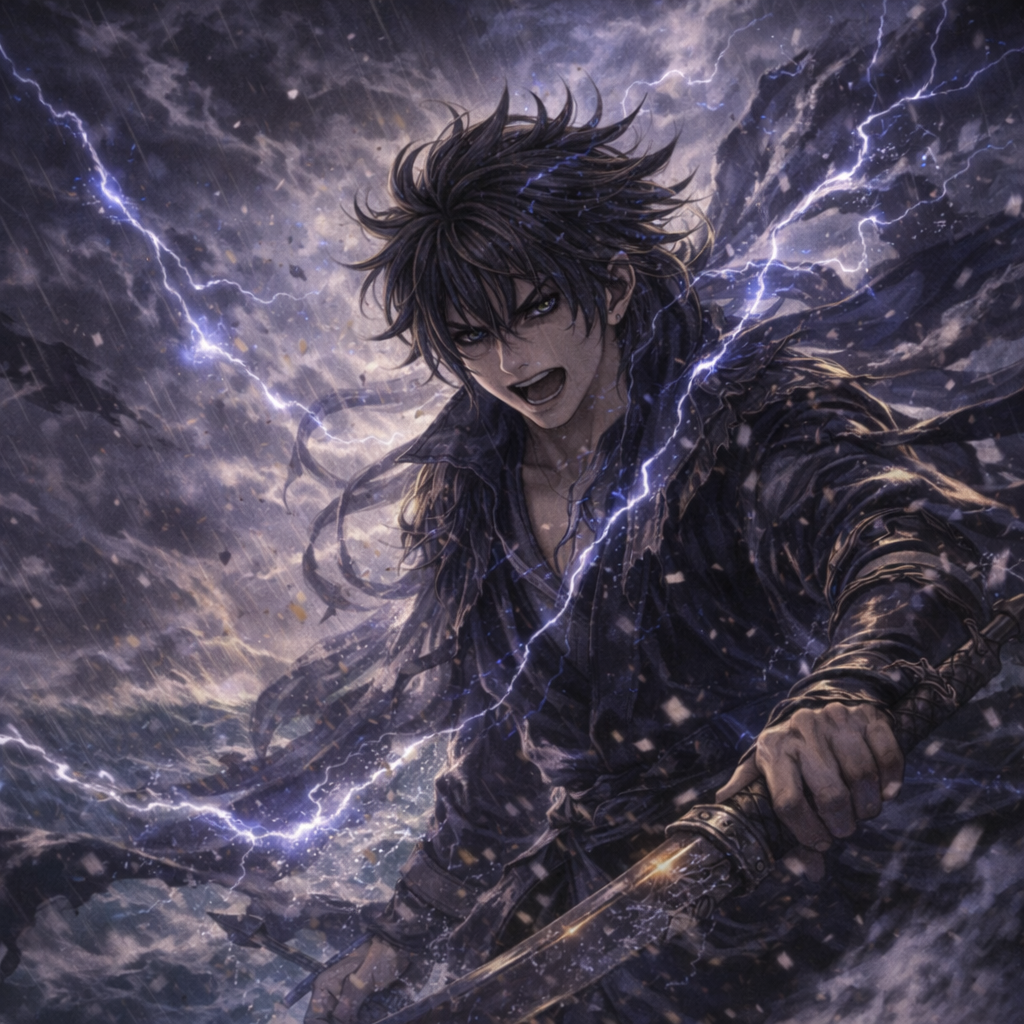 SusanooAmaterasu's brother. He slew Yamata no Orochi and presented Ame no Murakumo no Tsurugi (Kusanagi no Tsurugi), obtained from its tail, to Amaterasu.
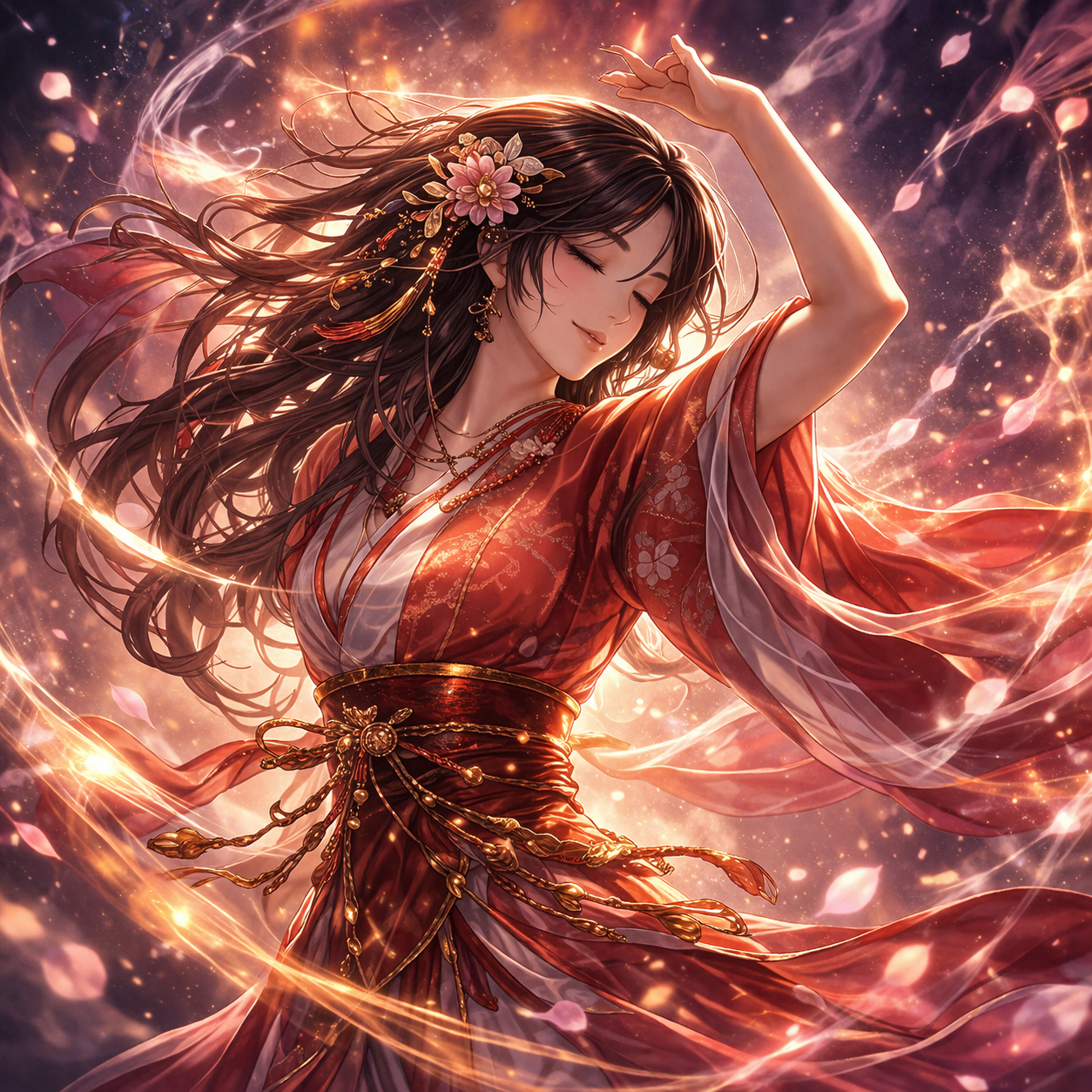 Ame-no-UzumeThe deity who performed the dance in the Rock Cave myth and played a part in the plan to lure Amaterasu out. She appears in the same story in which the mirror and jewel were made.