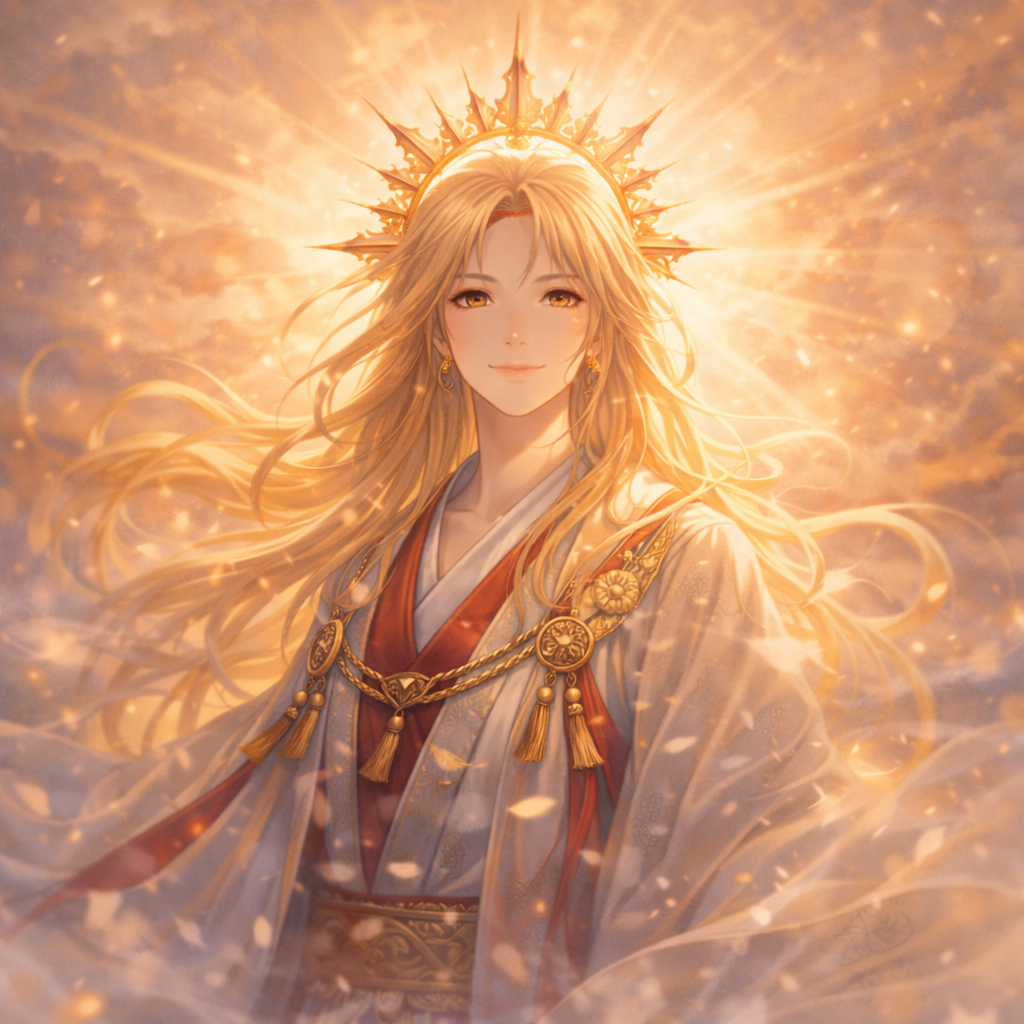
Ama-no-Iwato (the Heavenly Rock Cave; also called Iwato-gakure, "hiding in the rock cave") is one of the central Japanese myths. Distressed by the violent behavior of her younger brother Susanoo, the sun goddess Amaterasu hides herself behind the door of the Heavenly Rock Cave, plunging the world into darkness. The dismayed myriad deities gather before the cave, and through Omoikane's stratagem, Ame-no-Uzume's dance, and the great strength of Tajikarao, they draw Amaterasu out and restore light to the world. It is known as a representative myth of the death and rebirth of the sun and the restoration of order.
| Reading | Ama-no-Iwato / Iwato-gakure (hiding in the rock cave) |
|---|---|
| Main sources | Kojiki, Nihon Shoki |
| Main setting | Takamagahara (the Heavenly Rock Cave / the riverbed of Ame-no-Yasu-no-Kawara) |
| Principal deities | Amaterasu, Susanoo, Omoikane, Ame-no-Uzume, Tajikarao, Ame-no-Koyane, Futodama, and the myriad deities |
| Themes | The hiding and rebirth of the sun; the restoration of order; the cooperation of the gods |
| Associated sites | Amano-Iwato Shrine (Takachiho, Miyazaki Prefecture) and Amano-Yasugawara |
Visiting Takamagahara, the younger brother Susanoo committed a string of excessive outrages: he broke down the ridges between the rice paddies and hurled a flayed horse into the sacred weaving hall. Heartbroken and wounded by this, Amaterasu hid herself within the Heavenly Rock Cave (Ame-no-Iwayato) and shut its door. With the sun goddess gone, both Takamagahara and the Central Land of Reed Plains (the earth below) were wrapped in darkness; night went on without end, and it is said that every kind of calamity arose all at once. Both the Kojiki and the Nihon Shoki present this crisis as the starting point of the story.
At their wits' end, the myriad (yaoyorozu) deities gathered at the riverbed of Ame-no-Yasu-no-Kawara to deliberate on a remedy. With the god of wisdom Omoikane at the center, they devised a stratagem. First they gathered the long-crowing birds of the everlasting land (tokoyo-no-naganakidori, that is, roosters) and made them crow. Then Ishikoridome fashioned the Yata-no-Kagami (the eight-span mirror) and Tamanooya fashioned the Yasakani-no-Magatama (the curved jewels), while Ame-no-Koyane and Futodama performed divination using a deer's bone (futomani) and recited liturgical prayers (norito), arranging before the cave a lively setting for a festival with these treasures held aloft.
At the heart of the festival was the dance of Ame-no-Uzume, the goddess of the performing arts. Uzume mounted an overturned tub and stamped upon it, and in a state of divine possession (kamigakari) she bared her breast and let her garments fall open, dancing wildly. At the sight, the myriad deities burst into roaring laughter, and it is told that their laughter made all of Takamagahara shake. The unexpected merriment and laughter outside the sealed cave became the device that drew the curiosity of Amaterasu, who had shut herself away within.
Wondering how the outside, which should have been in darkness, could be so lively, Amaterasu opened the cave door a little to see what was happening. The gods told her, "A deity even nobler than you has appeared, which is why we are all rejoicing," and held out the Yata-no-Kagami so that her own reflection was shown to her. The moment she leaned forward, drawn by the light in the mirror, the mighty Tajikarao, who had been hidden at her side, seized her hand and pulled her out of the cave, while Futodama stretched a sacred straw rope (shimenawa) behind her so that she could not return. Thus the light came back to the world and order was restored. The Yata-no-Kagami and the Yasakani-no-Magatama made at this time later came to be counted among the Three Sacred Treasures.
Held responsible for his outrages, Susanoo had his beard and nails cut off, was made to pay a fine in goods, and was banished from Takamagahara (kamuyarai). Descending to the earth, he made his way to Izumo to slay the great serpent Yamata-no-Orochi. As for the setting of the myth, Amano-Iwato Shrine in Takachiho, Miyazaki Prefecture, is held to be the site of the rock cave, while the nearby Amano-Yasugawara is regarded as the place where the gods deliberated. There is also a legend that the rock door hurled away by Tajikarao became Mount Togakushi in Nagano Prefecture, and Togakushi Shrine there enshrines him.
AmaterasuThe sun goddess who hid in the rock cave. Her absence cast the world into darkness, and her return restored light and order; she is the center of the story.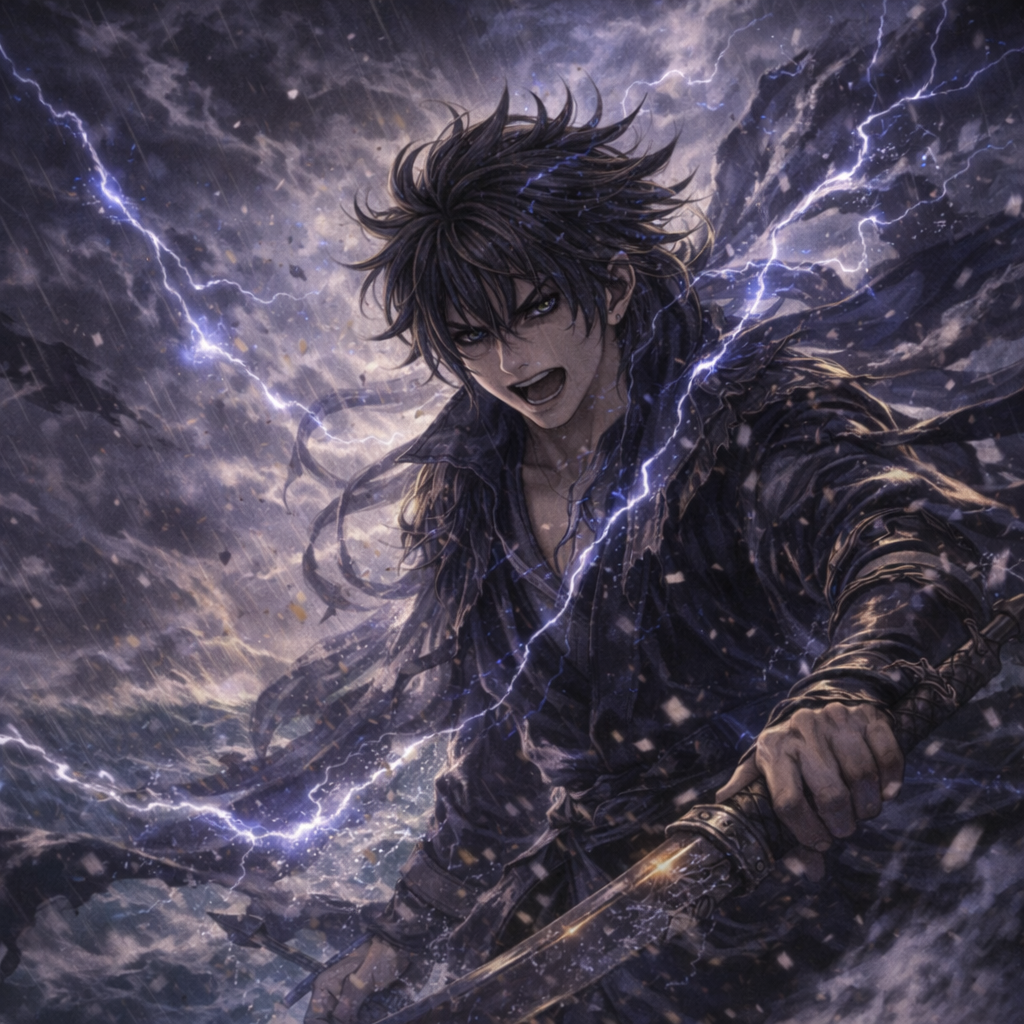 SusanooThe younger brother whose outrages in Takamagahara set off the hiding in the rock cave. After the incident he is banished from Takamagahara.
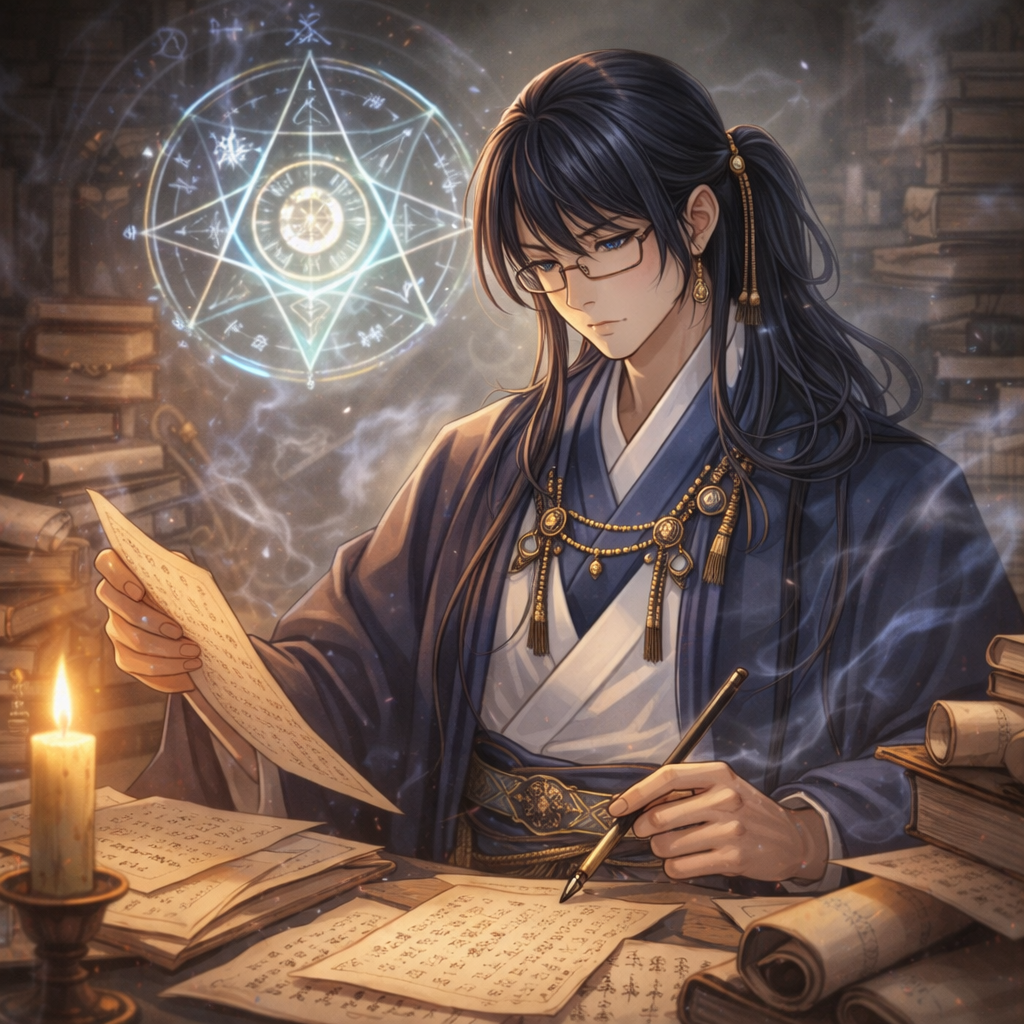 OmoikaneThe god of wisdom. He leads the gods' council and devises the whole stratagem to lure Amaterasu out.
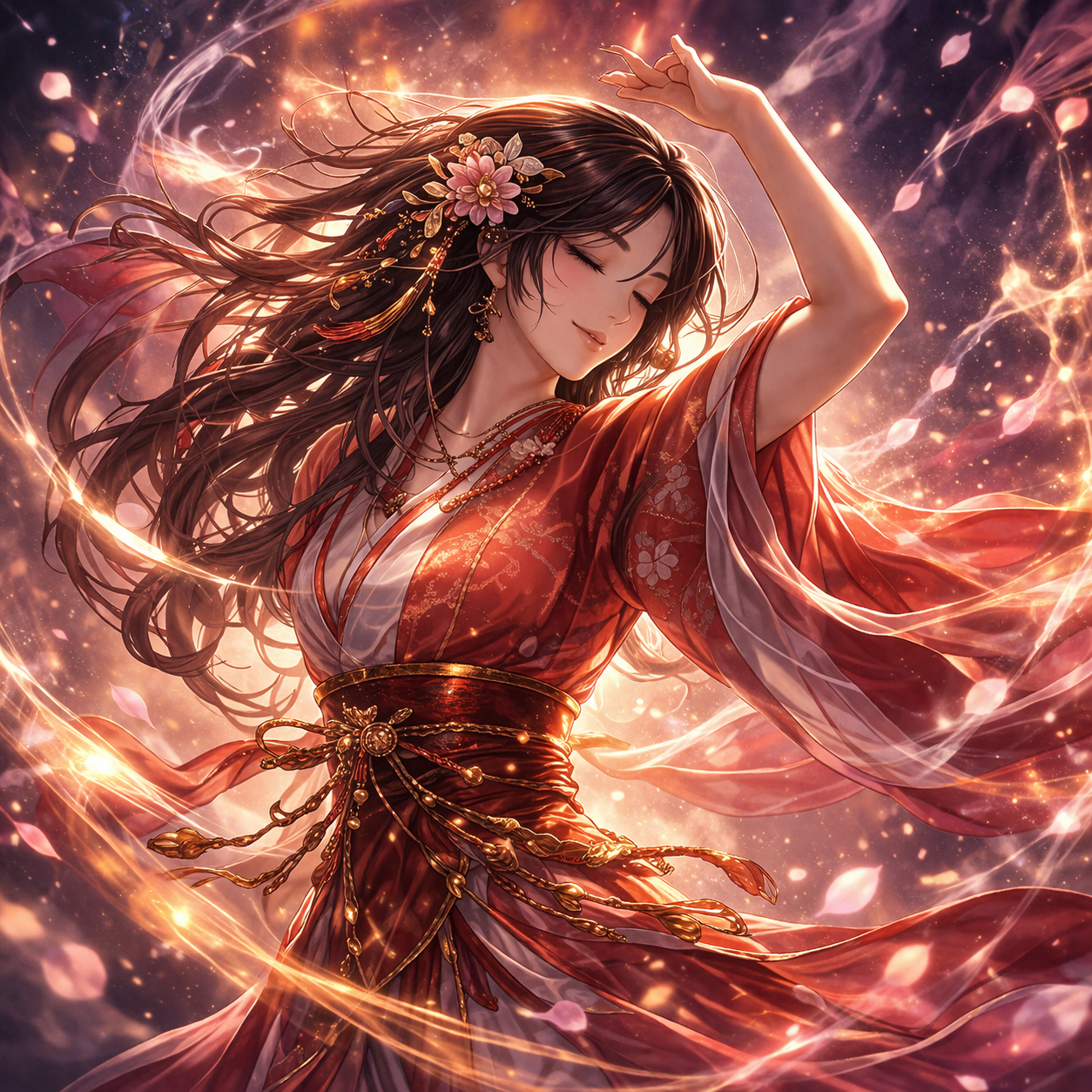 Ame-no-UzumeThe goddess of the performing arts. Dancing in divine possession atop a tub, she draws roaring laughter from the gods and awakens Amaterasu's curiosity.