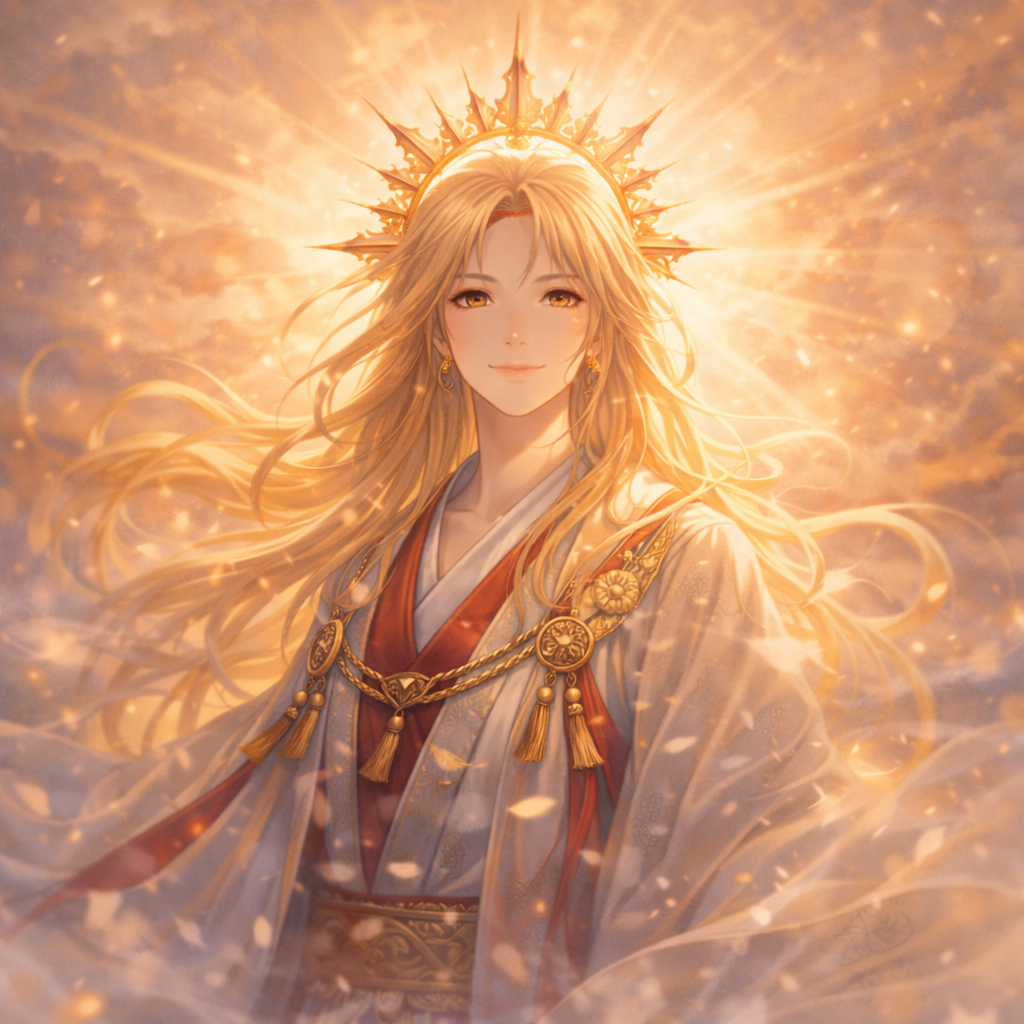
The Sankishi (mihashira no uzu no miko, also read sankishi) is a collective name for the three noble deities born last when Izanagi performed his purification after returning from the land of Yomi—Amaterasu (the sun), Tsukuyomi (the moon), and Susanoo (the sea plain). Izanagi entrusted each of the three with a realm to govern, and from this point the narrative of Japanese mythology begins to unfold in earnest. The Kojiki and the Nihon Shoki differ in how the deities are born and in the details of their division of rule.
| Reading | Mihashira no uzu no miko / Sankishi |
|---|---|
| Category | Collective name for deities of Japanese mythology (three pillars) |
| Constituent deities | Amaterasu, Tsukuyomi, Susanoo |
| Parent | Izanagi no Mikoto (Izanagi) |
| Origin of birth | Manifested during Izanagi's purification (misogi) after his return from Yomi |
| Principal sources | Kojiki, Nihon Shoki |
The Sankishi (mihashira no uzu no miko) is a collective name for three noble deities born near the opening of Japanese mythology—Amaterasu Omikami (Amaterasu), Tsukuyomi no Mikoto (Tsukuyomi), and Susanoo no Mikoto (Susanoo). The element "uzu" (珍) means precious or noble, so the name signifies "three pillars of especially noble children." In its Sino-Japanese reading it is also called "Sankishi." The three deities each preside over a fundamental cosmic domain—the sun, the moon, and the sea plain (the storm)—and they become the starting point for the major narratives of Japanese mythology that follow, such as the hiding in the Heavenly Rock Cave, the slaying of the Yamata no Orochi, the transfer of the land, and the descent of the heavenly grandchild. Because the mythological worldview truly begins to move with "the birth of the Sankishi," they are regarded as forming the core of the mythology as a whole.
Izanagi journeyed to the land of Yomi in pursuit of his late wife Izanami but could not bring her back. After returning to the earthly world, he performed a purification (misogi) at the Ahagihara by the small river mouth of the orange trees at Himuka in Tsukushi in order to wash away his defilement. According to the Kojiki, when he washed his left eye Amaterasu was manifested, when he washed his right eye Tsukuyomi was manifested, and when he washed his nose Susanoo was manifested. The three were the most noble deities, born at the very end of the purification, and Izanagi is said to have rejoiced greatly. A notable feature is that their contrasting characters—light (the sun), night (the moon), and turbulent power (the sea plain)—correspond symbolically to the parts of the body from which each was born.
Rejoicing at the birth of the Sankishi, Izanagi entrusted each of them with a world to govern. According to the Kojiki, he commanded Amaterasu to rule Takamagahara (the High Plain of Heaven), Tsukuyomi to rule the realm of night (yoru no osukuni, the world of night), and Susanoo to rule the sea plain. Amaterasu symbolizes orderly rule, while Susanoo—failing to govern the sea plain entrusted to him and weeping ceaselessly out of longing for his mother—sets in motion the developments that later lead to his expulsion from Takamagahara. This "division of rule" carries great mythological significance as the scene in which the apportionment of cosmic roles is established.
The birth of the Sankishi is depicted differently depending on the source. In the Kojiki, the three deities are born in turn through manifestation from the left eye, the right eye, and the nose. In the main text of the Nihon Shoki, by contrast, Izanagi and Izanami are said to have produced them after consulting that they would "beget one to be lord of the realm under heaven," and some accounts vary, including descriptions that mention Hiruko (the leech-child). The division of rule also varies from one alternate account (issho) to another, with Tsukuyomi's realm given as "the realm of night," "standing alongside the sun in heaven," or "the many layers of the tide of the blue sea plain." Such instability has been argued to be a trace of an originally two-deity myth of Amaterasu and Tsukuyomi, into which Susanoo was later incorporated.
AmaterasuThe sun goddess born from the left eye. The presiding deity who rules Takamagahara and the foremost of the Sankishi.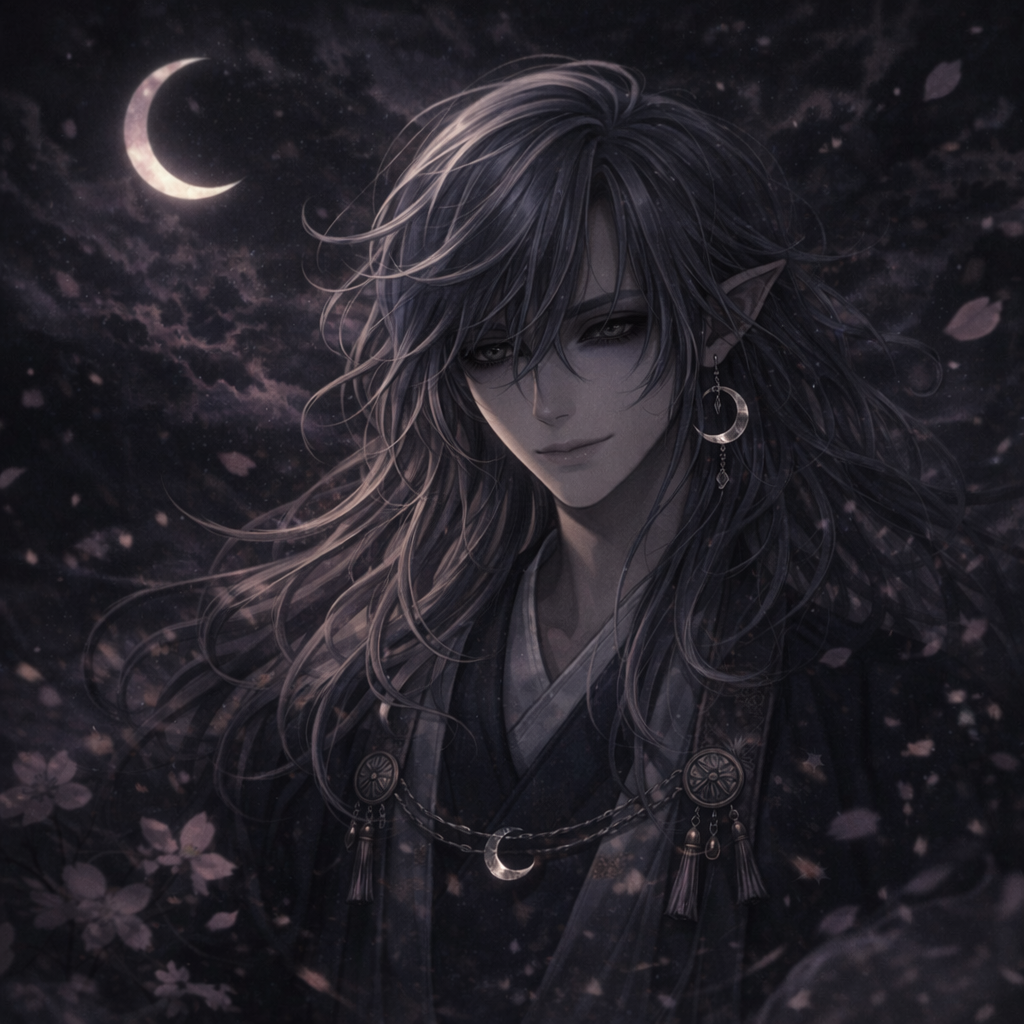 TsukuyomiThe moon deity born from the right eye. Said to rule the realm of night, but the deity about whom the fewest traditions survive.
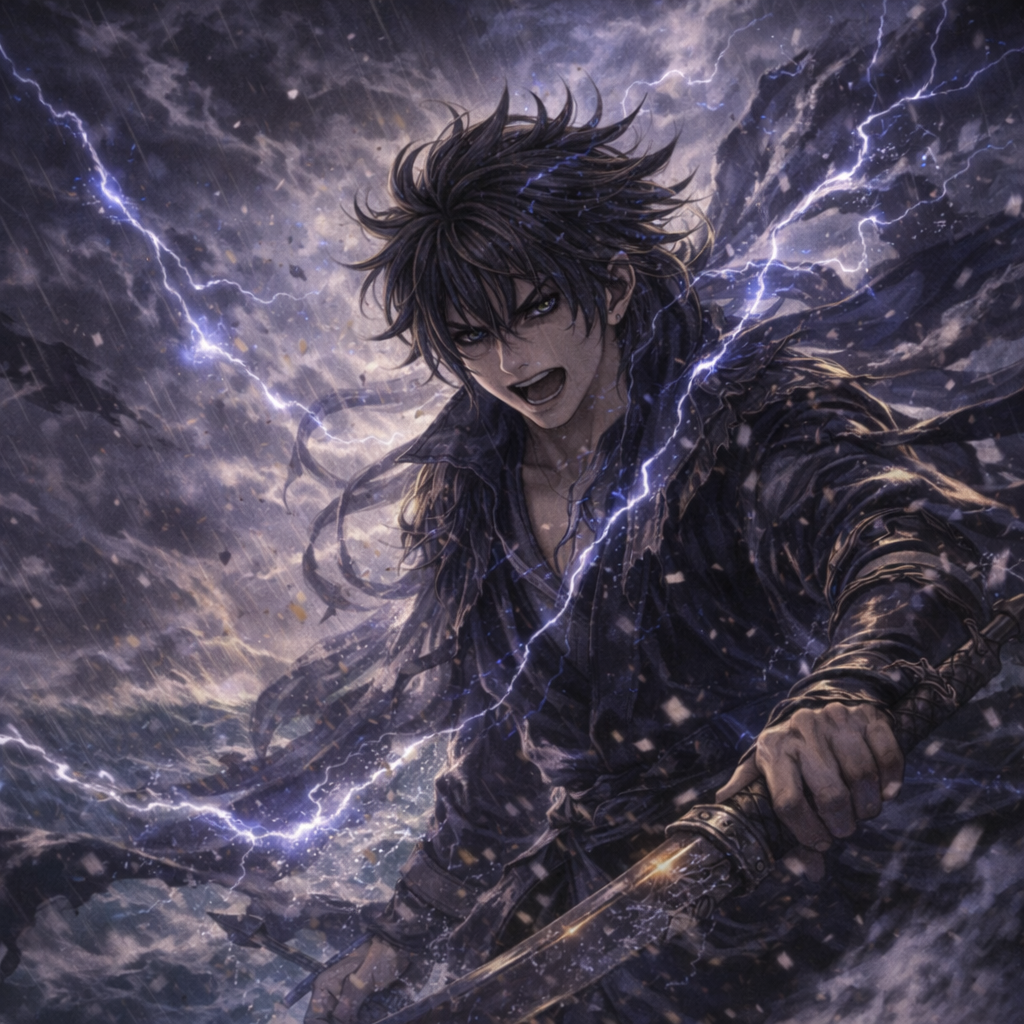 SusanooThe sea-plain deity born from the nose. Failing to govern the realm entrusted to him, he weeps ceaselessly and is later expelled.