What Is Shinto? Japan's Ancient Faith of the Eight Million Kami
Shinto is the indigenous folk faith that grew organically across the Japanese archipelago from ancient times. It venerates the countless deities who govern nature itself—mountains, seas, winds—and the deities of daily life and livelihood, known collectively as the "eight million kami" (yaoyorozu no kami). Its defining traits are that it has no founder and no unified scripture, and that it prizes "practice"—festivals and purification—over doctrine.
Classification
Japan's indigenous folk religion (nature worship, ancestor veneration, animistic)
Origins
No founder or founding year. Its prototype is thought to have formed during the Jomon, Yayoi, and Kofun periods
Core concepts
The eight million kami / purification (misogi and harae) / festivals and rites
Main branches
Shrine Shinto, Sect Shinto, and Folk Shinto (including Imperial Household Shinto)
Main facilities
Shrines (jinja)—with torii gates, halls of worship, and purification basins
Related texts
The Kojiki, the Nihon Shoki, the Fudoki, and others
What Is Shinto? The Eight Million Kami and Nature Worship
Shinto is Japan's indigenous folk faith, one that arose spontaneously from a way of life closely bound to nature through farming, fishing, and the like. From the deities who govern natural objects and phenomena—the kami of the sea, the mountains, the wind—to those who preside over food, clothing, shelter, and livelihood, and even the deities who opened up the land, these gods are so numerous that they are referred to collectively as the "eight million kami" (yaoyorozu no kami). Because Shinto recognizes a sacred presence even in lifeless things such as rocks and waterfalls, it has an animistic character. Ancient Japanese saw nature not as an adversary to confront but as a partner to live alongside, and the belief that kami dwell in all things is thought to have taken shape out of gratitude for nature's blessings.
Practice Over Doctrine: A Faith With No Founder and No Scripture
Shinto's most striking feature is that it has no particular founder and no unified canon or systematic doctrine equivalent to the Buddhist sutras or the Christian Bible. Words of prayer (norito) and the forms of ritual do exist, but these are regarded less as strict teachings than as means of expressing a reverent heart. At its center lies "practice"—festivals, rites, and shrine visits—rather than the understanding of doctrine. Especially valued is the notion of "purification." The cycle in which "defilement" (kegare)—the impurity that arises as the vital energy of ordinary life (ke) withers—is cleansed through misogi (ablution) and harae (exorcism), and vitality is restored through festivity (hare), forms the very core of the Shinto worldview.
Origins and History: From the Jomon and Yayoi Eras to State Ritual
Shinto has no clear moment of foundation; its prototype is thought to have begun in the Jomon period and taken shape across the Yayoi and Kofun periods. Along with rice cultivation, which arrived from the late Jomon into the Yayoi era, a faith that saw nature as one with the gods spread across the archipelago. In the Kofun period, the Yamato court organized such beliefs into state ritual throughout the land; rites were performed at the earliest shrines, such as Munakata Taisha and Omiwa Jinja, and the prototype of Shinto is held to have been established. The myths recounting the origins of the gods and the land were recorded in the Kojiki and the Nihon Shoki, compiled in the Nara period, and in the regional gazetteers known as the Fudoki. It is worth noting that even for the same myth, the Kojiki and the Nihon Shoki differ in many places over the spelling of divine names and the lines of the narrative.
Fusion With Buddhism: Shinbutsu-Shugo and the Meiji Separation
When Buddhism was introduced from the continent in the sixth century, the indigenous worship of the kami and Buddhism gradually became intertwined. From around the Nara period, a trend toward harmonizing the two—"shinbutsu-shugo" (the syncretism of kami and buddhas)—spread, and by the Heian period the "honji-suijaku" theory had taken hold, holding that the kami were originally buddhas and bodhisattvas who had provisionally appeared in the form of deities in order to save sentient beings. By contrast, priests of the Outer Shrine of Ise such as Watarai Ieyuki advocated a "reverse honji-suijaku" theory (the kami-primary, buddha-trace view), placing the kami above the buddhas. This long-standing state of fusion was forcibly severed by the early-Meiji "Shinbutsu Bunri" edict (the order to separate kami and buddhas). Carried out under a policy of making Shinto the state religion, this movement triggered the "haibutsu-kishaku"—the destruction of Buddhist halls, statues, and the like—in various parts of the country.
Shinto Today: Branches and Practice in Everyday Life
Modern Shinto is broadly divided into three categories: "Shrine Shinto," centered on the shrines people commonly picture; "Sect Shinto," which arose after the Meiji era from founders or existing shrines (including Shinto-based new religions such as Tenrikyo and Konkokyo); and "Folk Shinto," rooted in local communities. "Imperial Household Shinto," in which the imperial family performs rites such as the Daijosai and the Niinamesai, also plays a part. In daily life, Shinto lives on widely not so much as doctrine but as the customs and observances of everyday life—the first shrine visit of the New Year, the Shichi-go-san rite of passage for children, local festivals, and the etiquette of bowing before the torii gate and purifying one's hands and mouth at the water basin when visiting a shrine. This is the face of Shinto today.
It is the indigenous folk faith that grew organically across the Japanese archipelago from ancient times. It venerates countless deities (the eight million kami) who govern nature itself—mountains, seas, winds—as well as daily life and livelihood. It has no founder and no unified scripture, and it prizes practice—festivals and purification—over doctrine.
Q. How does Shinto differ from Buddhism?
Buddhism is a foreign religion with a founder (the Buddha), scriptures, and systematic doctrine, whereas Shinto is an indigenous Japanese faith with neither founder nor unified canon. Historically, from the sixth century onward the two became deeply intertwined as shinbutsu-shugo (the syncretism of kami and buddhas), coexisting for centuries until the Meiji-era separation of kami and buddhas.
Q. What does "the eight million kami" mean?
It is not a specific number but a phrase expressing "countless deities, too many to number." It symbolizes the Shinto worldview that kami dwell in all things, from natural objects and phenomena to livelihood and the land itself.
Q. Does Shinto have scriptures or a founder?
There is no unified scripture and no clear founder. Texts that convey the myths, such as the Kojiki and the Nihon Shoki, do exist, but these are records of history and mythology rather than sacred canon. A defining trait of Shinto is that it values practice—festivals and shrine visits—over doctrine.
The Three Sacred Treasures — The Three Sacred Treasures derived from myth. A symbol linking Shinto with imperial ritual.
Ama-no-Iwato (The Heavenly Rock Cave) — The myth of the Heavenly Rock Cave. An origin tale of a representative rite and festival surrounding the sun goddess Amaterasu.
Which god mirrors you?
Discover which of the 12 gods mirrors you — from your birth date and 6 short questions (30 sec, free).
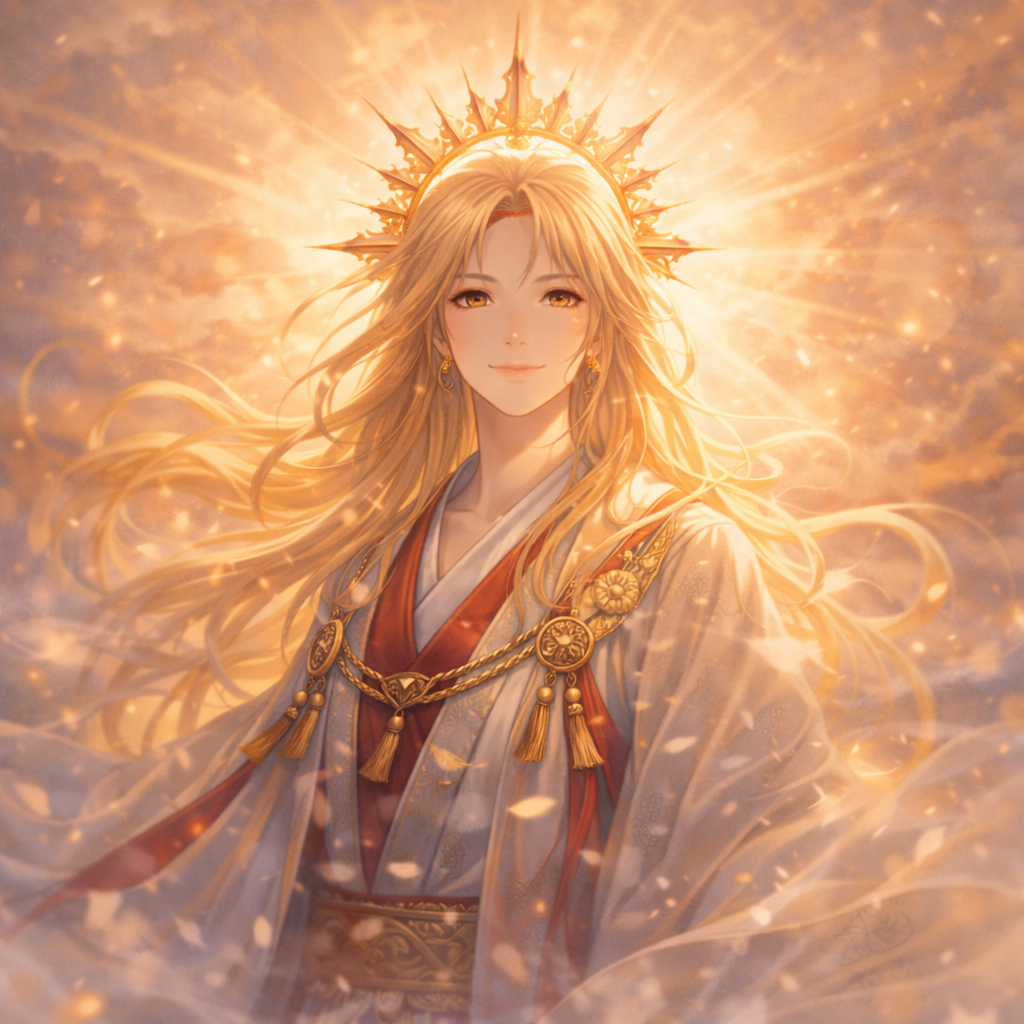 AmaterasuThe sun goddess who rules Takamagahara and the ancestral deity of the imperial family. Enshrined at the Inner Shrine of Ise, she is a central figure in Shinto.
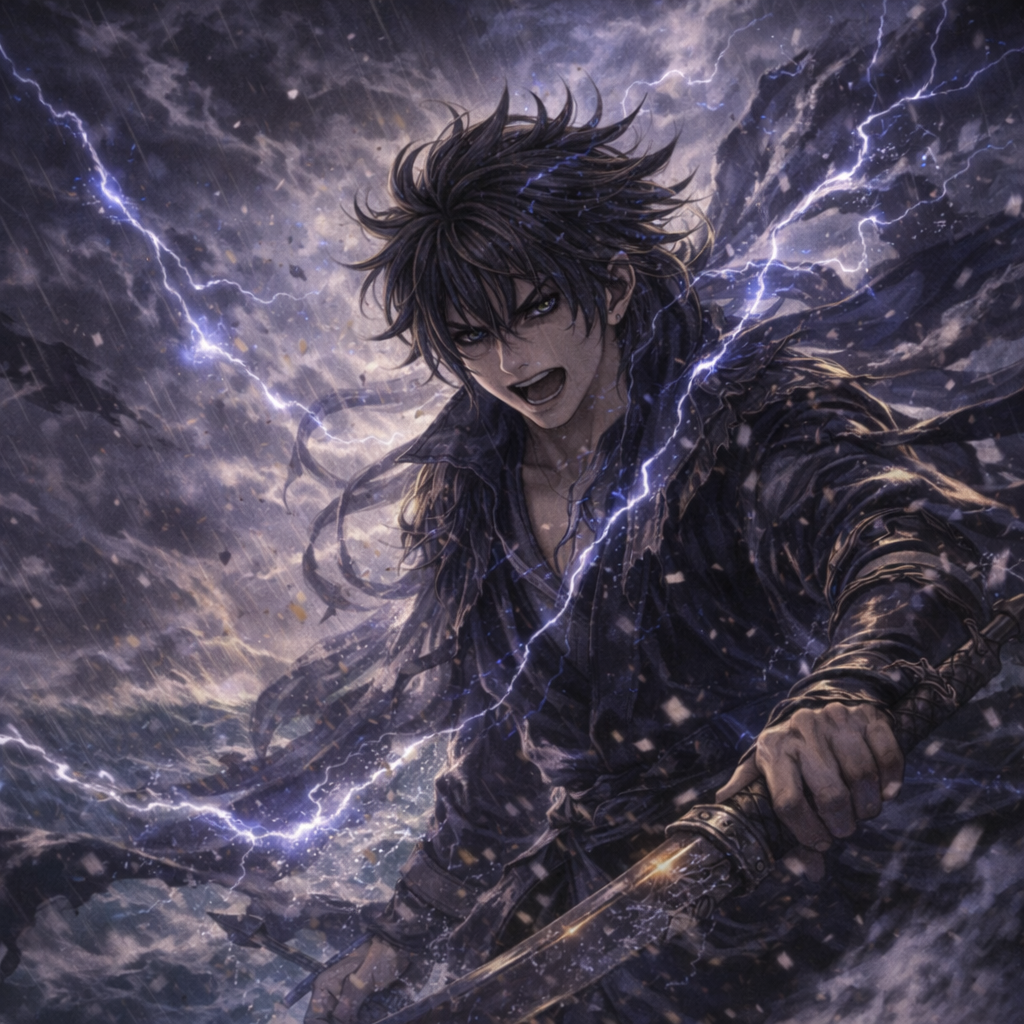 SusanooThe deity of storms and the sea. Central to the Izumo mythological cycle, he is widely enshrined at shrines across Japan.
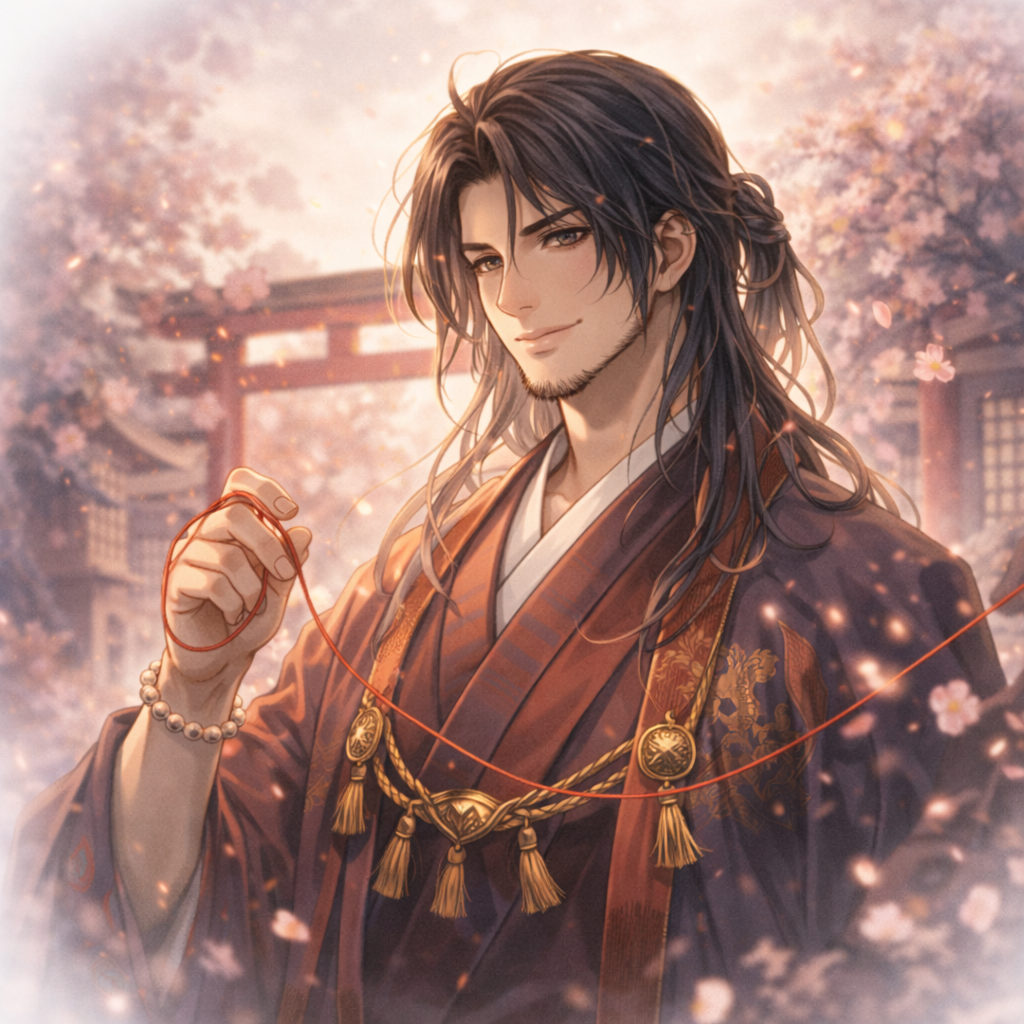 OkuninushiThe Izumo deity who accomplished the making of the land. After the myth of the land transfer, he is enshrined at Izumo Taisha as the deity of marriage bonds.
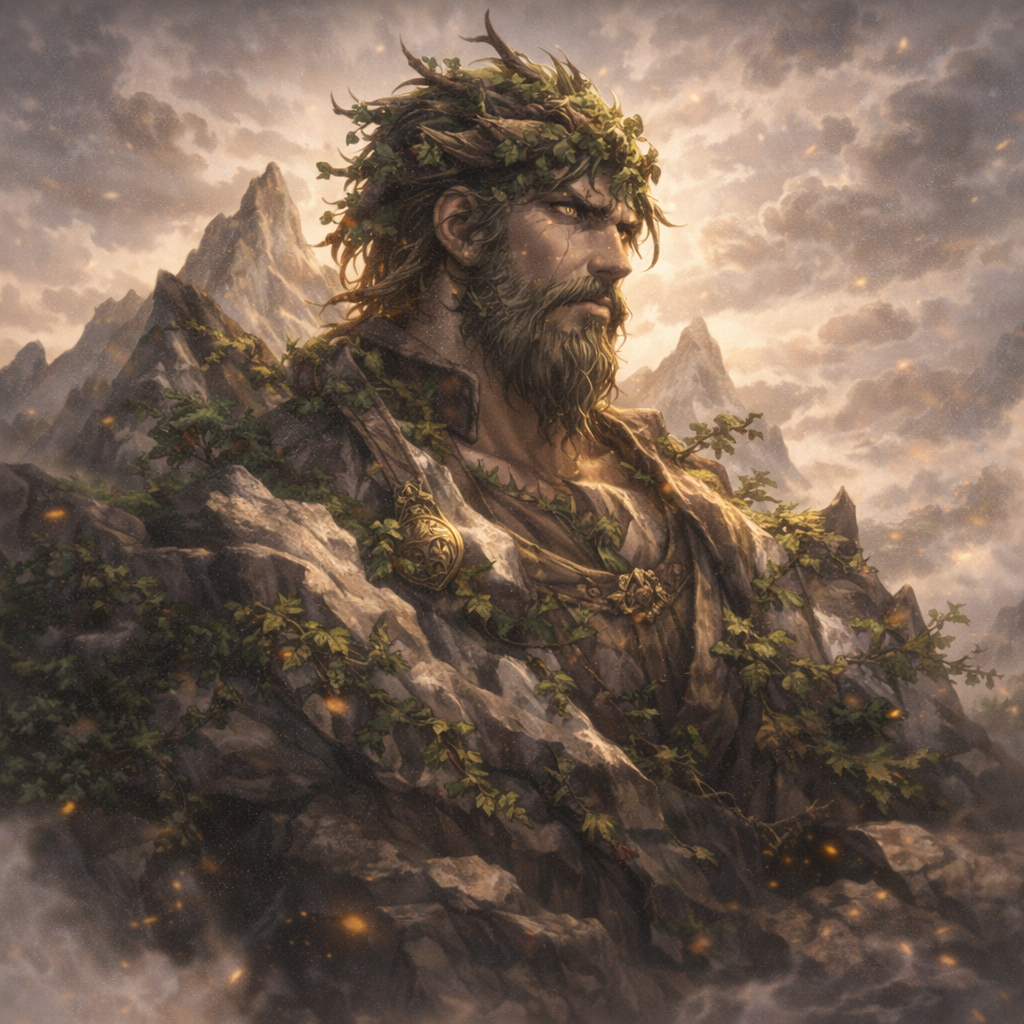 OyamatsumiThe deity who governs the mountains. A prime example of nature worship, he symbolizes the faith directed toward mountain deities.
 WatatsumiThe deity who governs the sea. He embodies the sea-deity faith rooted in gratitude for the bounty of the ocean.